Koh Samui is not, strictly speaking, a dive site. The shallow, silty waters immediately surrounding the island don’t make for interesting diving. But Koh Samui is one of the best bases for diving in Southeast Asia — a comfortable, well-connected island positioned within striking distance of some of the finest dive sites in the Gulf of Thailand.
From our pier in Bangrak, Sail Rock is 50 minutes. Koh Tao is 90 minutes. Chumphon Pinnacle is under two hours. Ang Thong Marine Park is 60 minutes in the opposite direction. You sleep well, eat well, and return from extraordinary diving to a proper beach resort. That combination — genuine world-class diving with five-star infrastructure onshore — is why serious divers keep coming back to Koh Samui.
This is the guide we wish existed when we started diving here. It covers the sites in real depth, the marine life with specifics, the seasons honestly, the courses, the costs, and everything practical you need to have an exceptional trip.
The Dive Sites: What’s Actually Out There
Sail Rock (Hin Bai) — 50 Minutes from Koh Samui
Sail Rock is the one. Ask any diver who has dived the Gulf of Thailand which single site they’d choose with one day left, and most will say Sail Rock without hesitation. A lone granite pinnacle rising from 40 metres to within 4 metres of the surface, sitting midway between Koh Phangan and Koh Tao in open blue water.
The numbers:
- Maximum depth: 30m
- Minimum depth (top of pinnacle): 4m
- Visibility: 15–25m in good conditions (occasionally 30m+)
- Water temperature: 28–30°C
What makes it exceptional:
The isolation is the key. Sail Rock has no protected bay, no surrounding reef to draw fish — it’s just a rock in the middle of nowhere. That makes it a magnet. Every pelagic fish passing through the Gulf gets drawn in by the structure. The result is marine life density that consistently shocks even experienced divers.
The schools of chevron barracuda are the first thing you notice. Hundreds of them, often thousands, circling the pinnacle in tight synchronised formation like a living tornado. Giant trevally hunt at the fringes. Batfish hover. Queenfish patrol. Below 25m, a thermocline marks the transition to cooler, darker water where the drama increases.
The chimney is the feature that distinguishes Sail Rock from every other site in the region. A vertical swim-through on the northwest face: you enter at 18m, ascend through a narrow column of rock, and exit at 5 metres in a burst of light and bubbles. It’s one of the most exhilarating dive features in Southeast Asia. Open Water certified divers can access it; Advanced divers reach the deeper sections of the pinnacle base.
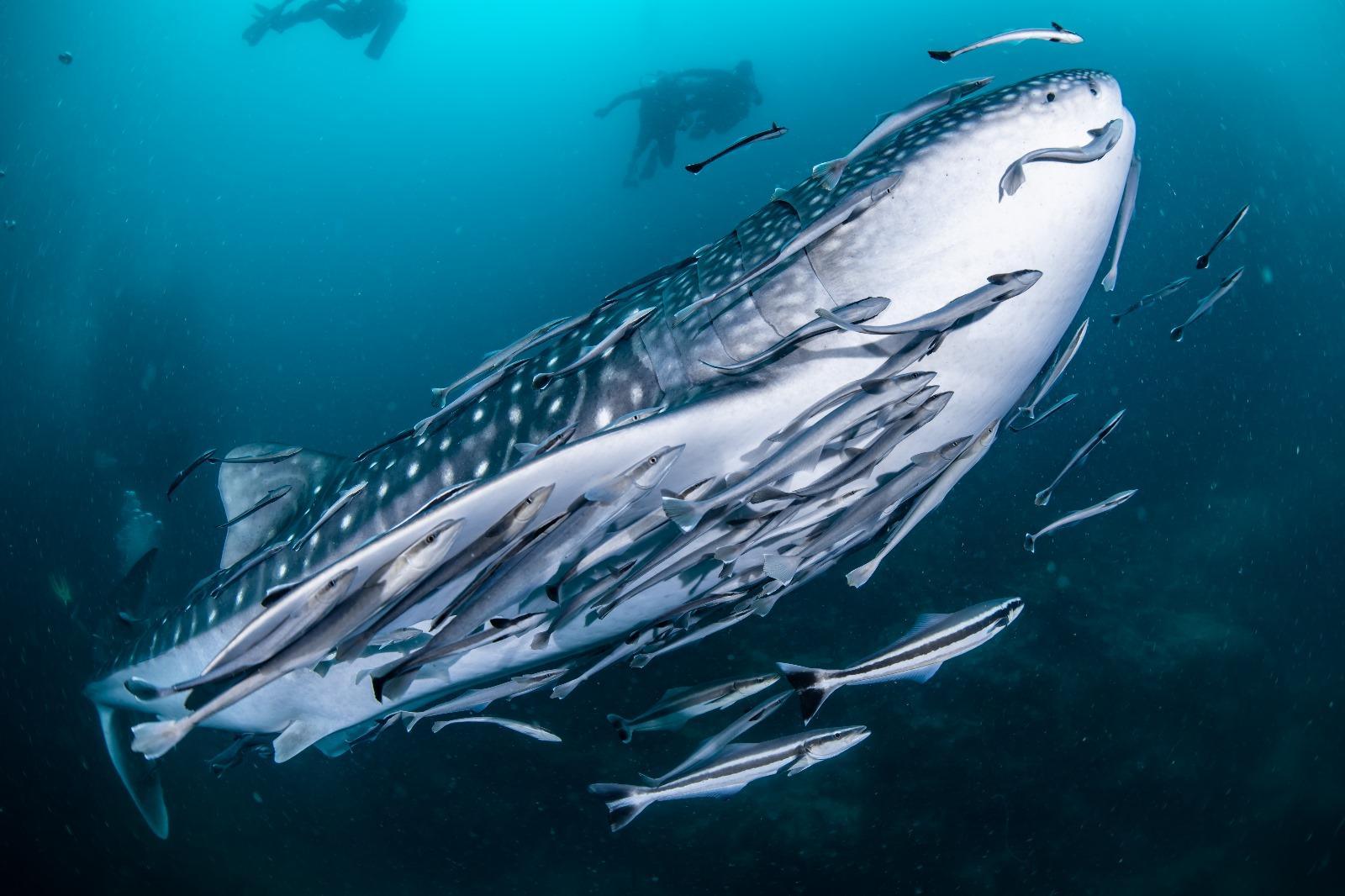
Whale sharks: Sail Rock has the highest historical whale shark encounter rate of any site in the Gulf of Thailand. Peak season runs March through May and again August through October. During the spring peak, encounters on consecutive dive days are genuinely common. Read the full whale shark guide here.
Certification required: Open Water Diver for the upper pinnacle and chimney (to 18m). Advanced recommended for the full depth profile.
Our trips: Sail Rock runs Tuesday, Wednesday, Friday, and Sunday. Two tanks, all equipment, hotel transfer, Nitrox for certified EANx divers.
Chumphon Pinnacle — The Dramatic Alternative
Chumphon Pinnacle is Sail Rock’s less-visited sibling — further away (under two hours from Samui), less frequently dived, and in many ways more dramatic. A cluster of granite pinnacles and canyon systems descending to 30m, carpeted in pink and purple soft coral anemones, with the kind of fish biomass that makes you stop and stare.
The numbers:
- Maximum depth: 30m
- Depth of main structure: 14–30m
- Visibility: 15–25m typical
What’s there:
Where Sail Rock’s marine life circles the outside of a single pinnacle, Chumphon’s topography creates enclosed channels and canyon systems. Huge schools of fusiliers — tens of thousands of fish in moving silver walls — fill the canyons. Barracuda hunt at the entrances. At the base of the main structure, white-eyed moray eels are abundant. Leopard sharks occasionally rest on the sand below.
The soft coral coating is extraordinary. The pink anemones at mid-depth (20–25m) create an otherworldly colour palette — this is the site where every underwater photographer comes away with something frame-worthy.
Whale sharks also visit Chumphon regularly, typically slightly later in the season than Sail Rock — April through June is the strongest window. The remote position means fewer boats here than at Sail Rock, so when a whale shark appears at Chumphon, you’re usually sharing it with far fewer divers.
Certification required: Advanced Open Water recommended. The most dramatic features are below 18m.
Our trips: Chumphon Pinnacle runs Monday, Wednesday, and Friday.
Koh Tao — The Island with Everything
Koh Tao (“Turtle Island”) is itself a diving destination — it has over 25 named sites around the island, ranging from shallow sheltered bays to its signature deep wreck. From Koh Samui it’s a 90-minute speedboat crossing, which is long enough to feel like a proper expedition.
The diversity is what sets Koh Tao apart. One day you can be hovering at 5m in a calm bay doing your first dives; the next you’re at 30m on the HTMS Sattakut with schooling fish and soft coral formations so thick you can’t see the hull.
Key sites around Koh Tao:
HTMS Sattakut — A former Thai Navy patrol vessel, 50 metres long, deliberately sunk in 2011 to create an artificial reef. It now rests at 30m and has become one of the most bio-diverse dive sites in the Gulf. The hull is covered in soft coral; the interior is accessible for trained wreck divers. Schooling glass fish fill every compartment. Advanced certification recommended.
Chumphon Pinnacle — Also accessible from Koh Tao (though the crossing is shorter from Samui’s side).
White Rock — A shallow, vibrant site accessible to beginners. Turtles, moray eels, triggerfish, lionfish. Excellent for first open water training dives.
Shark Island — Rocky outcrop on Koh Tao’s southeast corner. Regular blacktip reef shark sightings in the shallows. Strong current on the right days brings pelagics.
Mango Bay — Sheltered, shallow, calm. Perfect for beginner training dives or refresher dives.
What you’ll see: Hawksbill turtles at almost every site. Blacktip reef sharks in the shallower sites. Whale sharks in the open water approaches. Banded sea kraits (sea snakes, harmless) everywhere. Leopard sharks on sandy patches. Nudibranchs in extraordinary variety for macro photographers.
Our trips: Koh Tao day trip runs Monday, Thursday, and Saturday.
Ang Thong National Marine Park — The Pristine Option
Ang Thong is the outlier — not famous for big pelagics, not known for dramatic topography. What it offers is something different: diving in a protected national marine park so rarely dived that the reefs are in a state you simply don’t see at the heavily trafficked sites.
42 islands, limestone karst formations, emerald lagoons, hidden coves. The diving is mostly 5–20m over healthy hard coral gardens. The fish are relaxed — not because they’re habituated to divers, but because almost no divers come. Parrotfish graze. Stingrays cruise. Reef sharks circle in the clear, protected water.
What makes it worth considering:
If you’ve been to Sail Rock and Chumphon and you’ve had the barracuda walls, the whale shark encounter, the chimney — Ang Thong offers a counterpoint. It’s about being underwater somewhere genuinely pristine. The above-water scenery alone (towers of karst, water the colour of oxidised copper) justifies the trip.
Ang Thong also sits on the west side of Koh Samui, which makes it considerably more sheltered from the northeast monsoon than the east-coast sites. On days when Sail Rock is choppy, Ang Thong can be perfectly calm.
Our trips: Ang Thong Marine Park runs daily.
Marine Life: What You Can Realistically Expect to See
One of the things that sets the Gulf of Thailand apart from many other diving destinations is the specificity of the encounters. These are not theoretical sightings — they’re regular, predictable, and often extraordinary.
Whale sharks — Gulf of Thailand whale sharks congregate around Sail Rock and Chumphon Pinnacle. These are not the small individuals sometimes seen in lagoons — Gulf whale sharks are typically 5–10m, occasionally larger. The peak window is March–May, with a secondary window August–October. Encounters are not guaranteed but are genuinely frequent during these periods.
Blacktip reef sharks — Common at Shark Island (Koh Tao), White Rock, and Chumphon Pinnacle. Typically 1–1.5m, completely non-aggressive, one of the most reliable encounters in the Gulf. Present year-round.
Hawksbill turtles — Almost every Koh Tao dive produces at least one turtle encounter. They feed on sponges at the reef wall and are utterly indifferent to divers. Some individuals have been identified at the same sites for over a decade.
Leopard sharks — The beautiful, docile carpet shark that rests on sandy patches at depth. Regularly seen at Chumphon, occasionally at Sail Rock. Usually 1.5–2m, again completely harmless.
Chevron barracuda — The signature species at Sail Rock. The schools are large enough to create genuine awe — hundreds to thousands of individuals moving in coordinated formation. Different species and grouping behaviour from the single aggressive barracudas you might have read about elsewhere; these are schooling fish that pay no attention to divers.
Giant trevally — Hunting at the fringes of the barracuda schools. Powerful, fast, occasionally very large (20kg+). The sight of trevally attacking a baitball is one of the more dramatic things you’ll see underwater.
Manta rays — Occasional visitors to Chumphon and the outer areas near Sail Rock. Not predictable but documented encounters exist. Early morning dives in April–May have the highest historical frequency.
Banded sea kraits — Sea snakes, technically. Highly venomous but extremely docile — they are not aggressive and their small mouths make biting a human almost impossible without deliberate provocation (don’t provoke them). Common at most sites; snaking along the reef in their unhurried way.
Nudibranchs — For macro photographers, the Gulf offers exceptional variety. Spanish dancer nudibranchs (dinner plate sized, brilliant red) at Sail Rock. Chromodorids in every colour. Phyllodesmium iriomotensis at Koh Tao. Bring a macro lens.
Seahorses — At Koh Tao’s sheltered bays. Require a patient eye and a knowledgeable guide. Worth asking specifically if seahorse encounters are a priority.
Diving Conditions: Water, Visibility, Temperature
Water temperature is one of the Gulf of Thailand’s greatest advantages. 27–30°C year-round with very little variation between seasons. No drysuit, no ice, no fingers going numb at 20m. A 3mm wetsuit covers the coldest months (December–February); a rash guard or shorty is plenty from April through October.
Visibility varies significantly by season:
- January–May (peak): 15–25m, occasionally 30m at Sail Rock
- June–September: 12–20m typical
- October–November: 8–15m on rough days, still 15m+ on calm days
Currents at most Gulf sites are mild to moderate — appropriate for beginner and intermediate divers. Sail Rock can have stronger current on some days, particularly below 25m where the thermocline sits. Chumphon Pinnacle’s canyon systems can accelerate current on incoming tide. Neither is dangerous for a competent diver; your guide will brief you on conditions before each dive.
Thermoclines are common at Sail Rock below 25m — the temperature drop from the warm surface water to the cooler deep water can be 3–4°C and can affect buoyancy. Advanced divers who’ve been warned about this adjust quickly; it’s worth knowing before you hit it for the first time.
When to Go: Seasons and Windows
The Gulf of Thailand diving season covers roughly ten to eleven months of the year — far more accessible than the Andaman Sea, which shuts for liveaboards from May to October.
Best overall diving: January through May. The northeast monsoon has passed, the Gulf is settled, visibility is at its peak, and whale shark frequency builds through the spring. Detailed month-by-month guide here.
Whale shark peak: March through May, with a secondary window August to October. Full whale shark guide here.
Rainy season: October through December, with November being the most difficult month. Dive trips still run on suitable days. Honest rainy season guide here.
For Koh Samui vs Phuket decisions: If you’re weighing coasts, the Gulf of Thailand is accessible January through August with minimal interruption; the Andaman (Phuket) has the edge November through April only. Full comparison here.
PADI Courses: Learning to Dive in Koh Samui
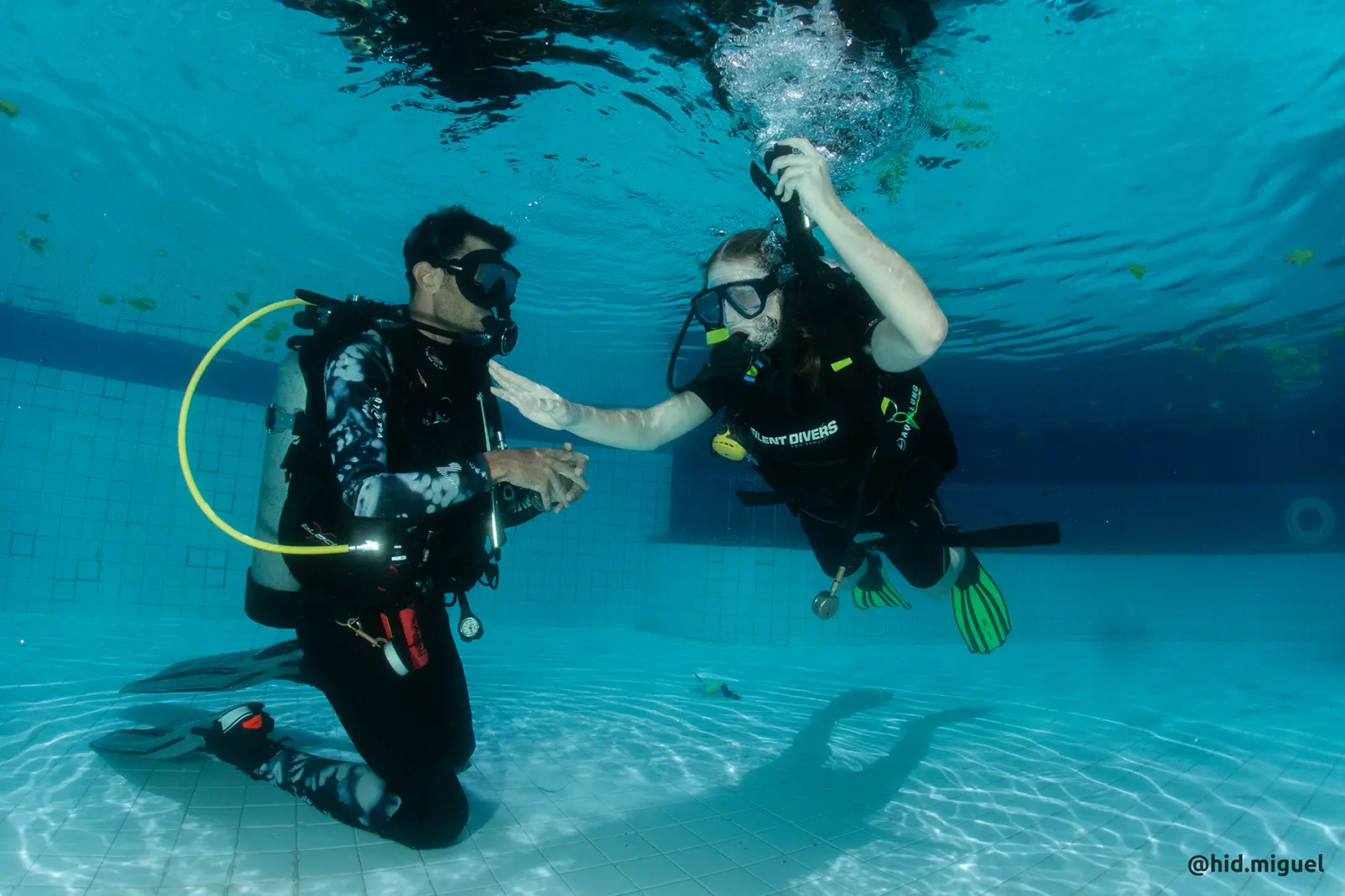
Koh Samui is a genuinely excellent place to learn to dive. The Gulf is warm and clear, the conditions are forgiving for students, and you can progress from first breath underwater to certified diver in three days — then immediately use that certification on the best dive sites in the region.
The Entry Options
Discover Scuba Diving — One day, no certification. Pool session + one guided ocean dive to 12m. For those who want to try it before committing. ฿3,500.
PADI Scuba Diver — Two days. Partial OWD certification, dive to 12m supervised. Good if you only have two days and want more than a DSD. ฿9,900.
PADI Open Water Diver — Three to four days. Full certification to 18m. The right choice for anyone serious about diving. ฿18,200. Includes all equipment, eLearning, transfers, certification fees.
PADI Advanced Open Water — Two to three days (5 adventure dives). Extends your depth to 30m. Opens up the full profiles at Sail Rock and Chumphon. Can be done immediately after OWD. ฿14,200.
PADI Rescue Diver — Three to four days. No new depth limit but the most personally transformative course in recreational diving. Prerequisites: AOWD + Emergency First Responder. ฿18,500.
Junior Courses (Age 10–14)
Children can get PADI certified from age 10. The Junior Open Water Diver course is identical to the adult version — same training, same certification — with age-appropriate depth limits (12m for ages 10–11; 18m for ages 12–14) and a requirement that all ocean dives are done with a certified adult.
Full guide to junior diving here.
How Long Does Certification Take?
Three days for Open Water in standard conditions, with eLearning completed beforehand. Detailed timeline guide here.
Practical Guide: What to Expect on a Dive Trip
A Standard Day
07:45 — Hotel pickup from most areas of Koh Samui. Your dive centre handles transfers; you don’t need to arrange transport.
09:00 — Boat departure from Silent Divers pier. Check-in, equipment fitting, gear assembly.
09:00–10:30 — Boat crossing to the site (50 minutes to Sail Rock, 90 minutes to Koh Tao).
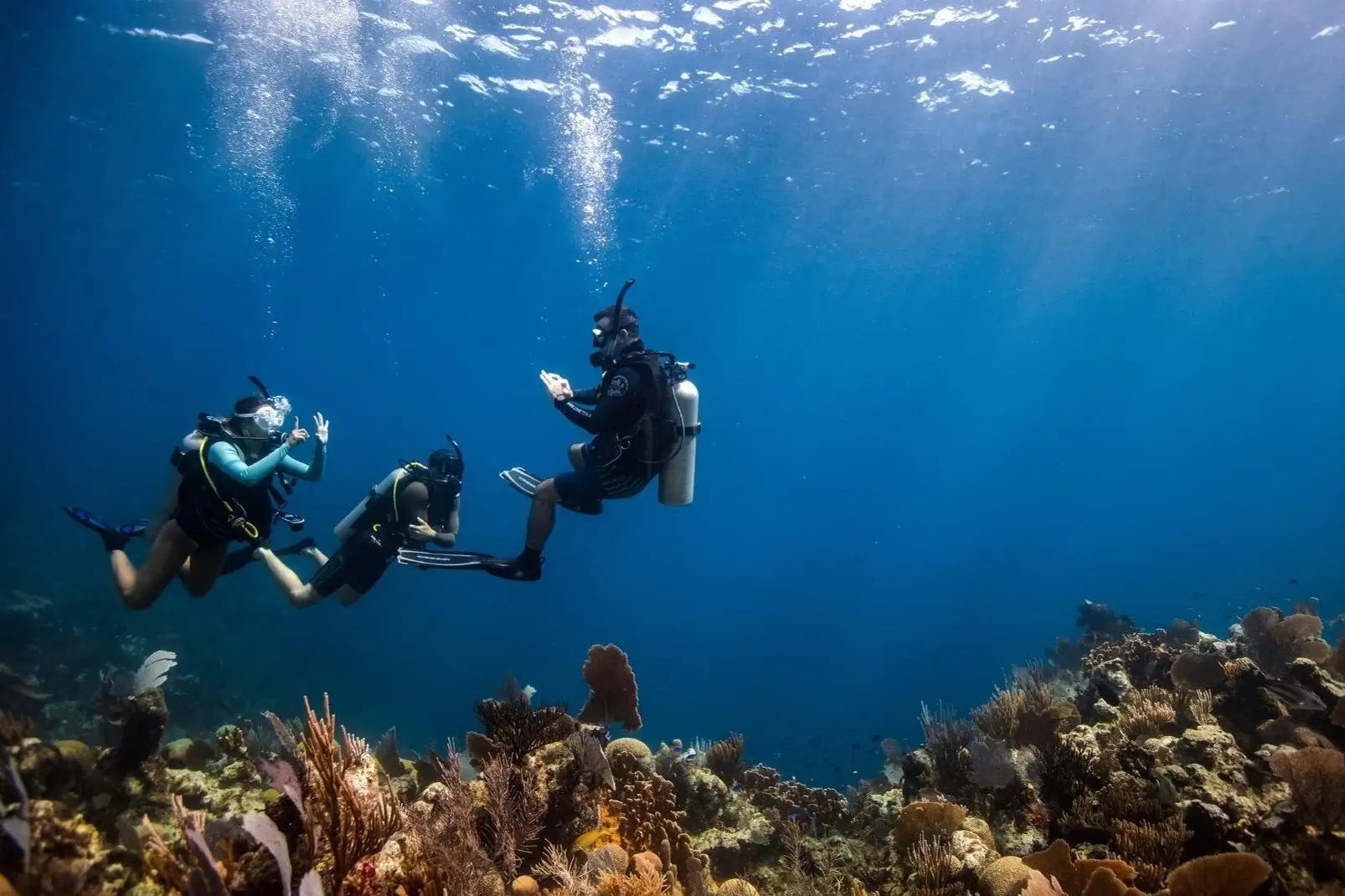
At the site — Pre-dive briefing: site conditions, depth profile, what you’ll see, hand signals, emergency procedures. Kit up, giant stride entry.
Dive one — 45–60 minutes depending on depth and air consumption. Surface interval follows.
Surface interval — Typically 45–60 minutes. Lunch served on the boat. Genuinely good food: Thai or Western, vegetarian and vegan options available.
Dive two — Second dive at the same or a nearby site.
Return crossing — 50–90 minutes back to Chaweng.
15:00–16:00 — Hotel drop-off.
What’s Included in Our Trips
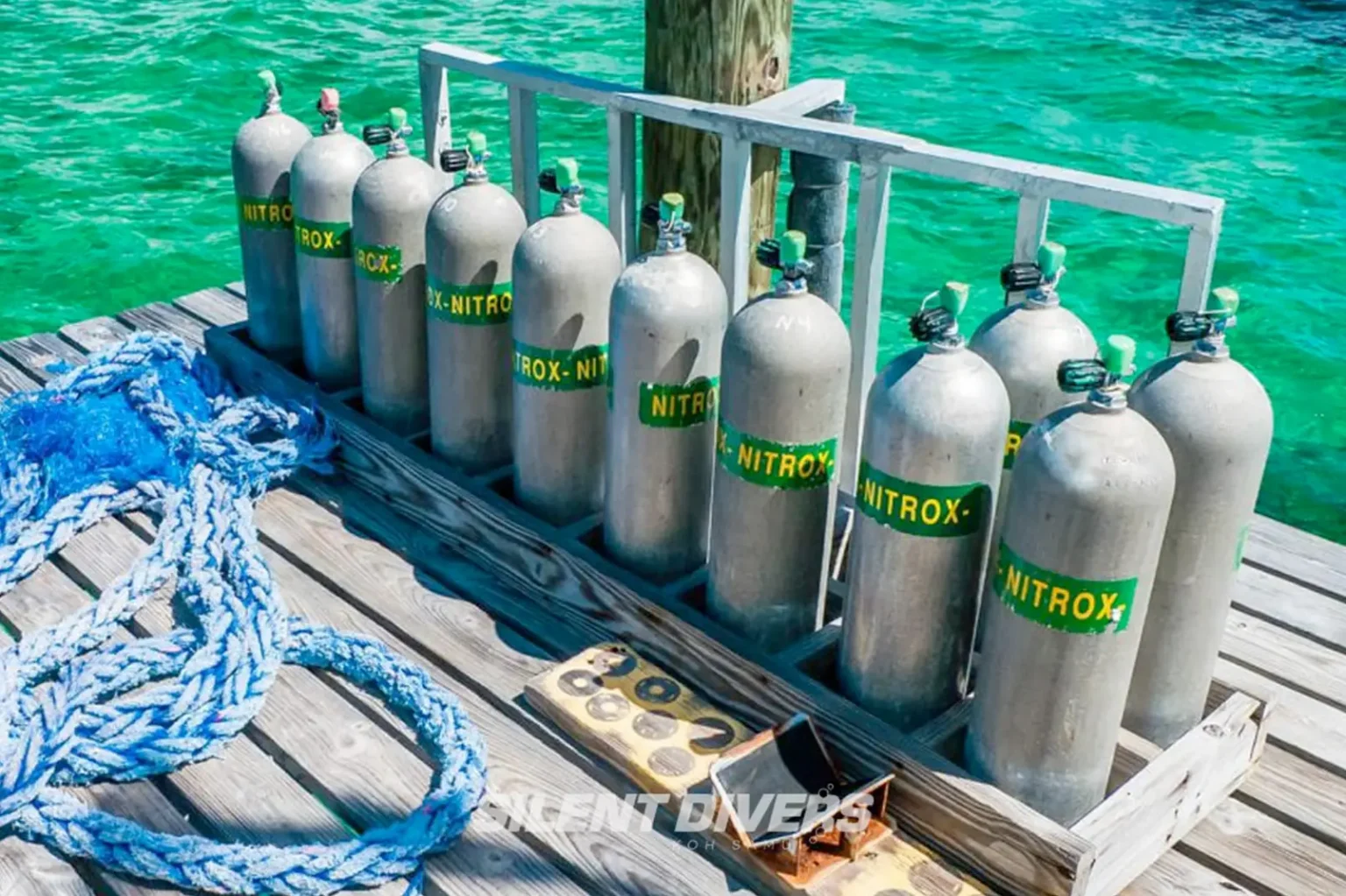
Every Silent Divers trip includes: hotel transfer, all dive equipment (BCD, regulator, wetsuit, mask, fins, weights, tanks), dive insurance, dive guide, Free soft drinks, and lunch on board. Free Nitrox fills for all EANx certified divers.
Nothing surprising on the invoice.
What to Bring
- Swimwear (under your wetsuit)
- Towel
- Reef-safe sunscreen
- Sunglasses and a hat (for the boat crossing)
- Seasickness medication if you’re prone (we have some on the boat and at the dive house)
- Your dive certification card (digital is fine)
- Your logbook if you have one
Your tanks, weights, and all dive equipment are provided and already on the boat.
Nitrox
PADI Enriched Air Nitrox certification is available as a half-day add-on. Nitrox extends your no-decompression limits significantly — particularly useful on multiple-dive days or if you want to maximise bottom time at Chumphon. Nitrox is free on all our trips for certified divers. The certification pays for itself on the first trip.
Costs: What to Budget for Diving in Koh Samui
| Activity | Price (THB) | Includes |
|---|---|---|
| Discover Scuba Diving | ฿3,500 | Equipment, guide, 1 ocean dive |
| Day trip — Sail Rock | ฿4,650 | 2 dives, equipment, transfer, lunch |
| Day trip — Chumphon Pinnacle | ฿4,950 | 2 dives, equipment, transfer, lunch |
| Day trip — Koh Tao | ฿4,950 | 2 dives, equipment, transfer, lunch |
| Day trip — Ang Thong | ฿4,800 | 2 dives, equipment, transfer, lunch |
| PADI Open Water course | ฿18,200 | Full certification, 3–4 days |
| PADI Advanced Open Water | ฿14,200 | 5 adventure dives, 2–3 days |
| Nitrox course | ฿3,900 | Half day, certification |
Deposits are 20% of the trip total, with the balance due before departure. Free cancellation up to 72 hours before your trip.
Choosing a Dive Centre in Koh Samui
There are several operators running dive trips from Koh Samui. When choosing, the questions to ask:
What are the group sizes? Small groups (maximum 4–6 per guide) mean better attention in the water, safer diving, and a better experience at sites like Sail Rock where current and conditions require close monitoring. Larger operators often run groups of 8–12 per guide.
Is equipment maintained? Ask when equipment was last serviced. Ask to see the tanks’ test dates. Rental regulators should be checked annually. This isn’t pedantic — equipment failure underwater is not theoretical.
Do they include Nitrox? Free Nitrox for certified divers is a real differentiator on multi-dive days.
Do guides actually know the sites? Your dive guide should be able to tell you specifically what you’re likely to see that day based on current conditions and sightings, not recite a brochure.
What’s included in the price? Equipment, transfer, insurance, lunch — these are significant costs if paid separately. Compare all-in prices, not headline rates.
At Silent Divers, we’re a PADI 5-Star Instructor Development Centre with maximum 4:1 student ratios, full insurance on every trip, free Nitrox, and guides who have dived these sites hundreds of times. Book here or enquire if you have questions.
Safety and Medical
Medical clearance: Before any PADI course, you complete a standard medical questionnaire. Certain conditions (heart disease, epilepsy, recent surgery, insulin-dependent diabetes, some lung conditions) require a doctor’s written clearance. This is not unusual and we’ll help you navigate it.
Seasickness: The crossing to Sail Rock (50 minutes) is usually fine. Koh Tao and Chumphon (90 minutes) can be rougher in certain weather. If you’ve been seasick before, take medication before boarding — not when you already feel it coming. Scopalamine patches (available at Koh Samui pharmacies) are the most effective for longer crossings.
The bends: Decompression sickness is rare in recreational diving when you follow tables and no-decompression limits. All our guides track your depth profile and air. The nearest recompression chamber is on Koh Samui (private hyperbaric facility) and at the government hospital — we carry the emergency contact number and oxygen on every boat.
Flying after diving: Don’t fly within 18 hours of your last dive (some guidelines say 24 hours for multiple-dive days). Plan your last dive day accordingly. We brief every group on this before their final dive.