One of the biggest advantages of diving in the Gulf of Thailand is the sheer reliability of it. Unlike the Andaman Sea — where the southwest monsoon shuts down diving from May to October — Koh Samui’s dive sites are accessible for roughly ten to eleven months of the year. That’s a huge window.
But accessible and exceptional are not the same thing. Visibility varies. Whale shark seasons come and go. Some months the Gulf is glass-calm; others you’re hanging on as the speedboat crests a swell. This guide gives you the honest month-by-month picture so you can time your trip to match what matters to you.
Quick Reference: Koh Samui Diving Conditions by Month
| Month | Conditions | Visibility | Water Temp | Whale Sharks |
|---|---|---|---|---|
| January | ⭐⭐⭐⭐⭐ Excellent | 15–25m | 28°C | Rare |
| February | ⭐⭐⭐⭐⭐ Excellent | 15–25m | 28°C | Occasional |
| March | ⭐⭐⭐⭐⭐ Excellent | 15–25m | 29°C | Good |
| April | ⭐⭐⭐⭐⭐ Excellent | 15–25m | 30°C | High |
| May | ⭐⭐⭐⭐⭐ Excellent | 15–25m | 30°C | Peak |
| June | ⭐⭐⭐⭐ Very Good | 12–20m | 30°C | Moderate |
| July | ⭐⭐⭐⭐ Very Good | 12–20m | 30°C | Moderate |
| August | ⭐⭐⭐⭐ Very Good | 12–20m | 30°C | Building |
| September | ⭐⭐⭐ Good | 10–18m | 29°C | Good |
| October | ⭐⭐ Variable | 8–15m | 28°C | Declining |
| November | ⭐ Poor | 5–12m | 27°C | Low |
| December | ⭐⭐⭐ Improving | 10–18m | 27–28°C | Low |
January & February — Peak Season
These are unambiguously the best months to dive in Koh Samui. The northeast monsoon has passed, the Gulf has settled, and you get long stretches of perfect weather: blue skies, light winds, calm seas, and 15–25m visibility as standard.
Water temperature sits around 28°C — comfortable in a 3mm wetsuit, warm enough for just a rash guard if you run warm. Thermoclines are rare at Sail Rock above 25m, which means no unexpected cold water to ruin your buoyancy work.
The only downside: January and February are peak tourist season. Prices are at their highest and the more popular sites — particularly Sail Rock — see multiple boats. Our trips still keep groups small, but you may share the water with other dive operators.
Best for: First-time divers wanting perfect conditions. Photography. Anyone who booked a non-refundable February flight and needs certainty.
March, April & May — The Sweet Spot
This is the window we’d choose if forced to pick one period for diving in Koh Samui. Conditions remain excellent — the sea is settled, visibility is strong — but crucially, whale shark season is at its peak.
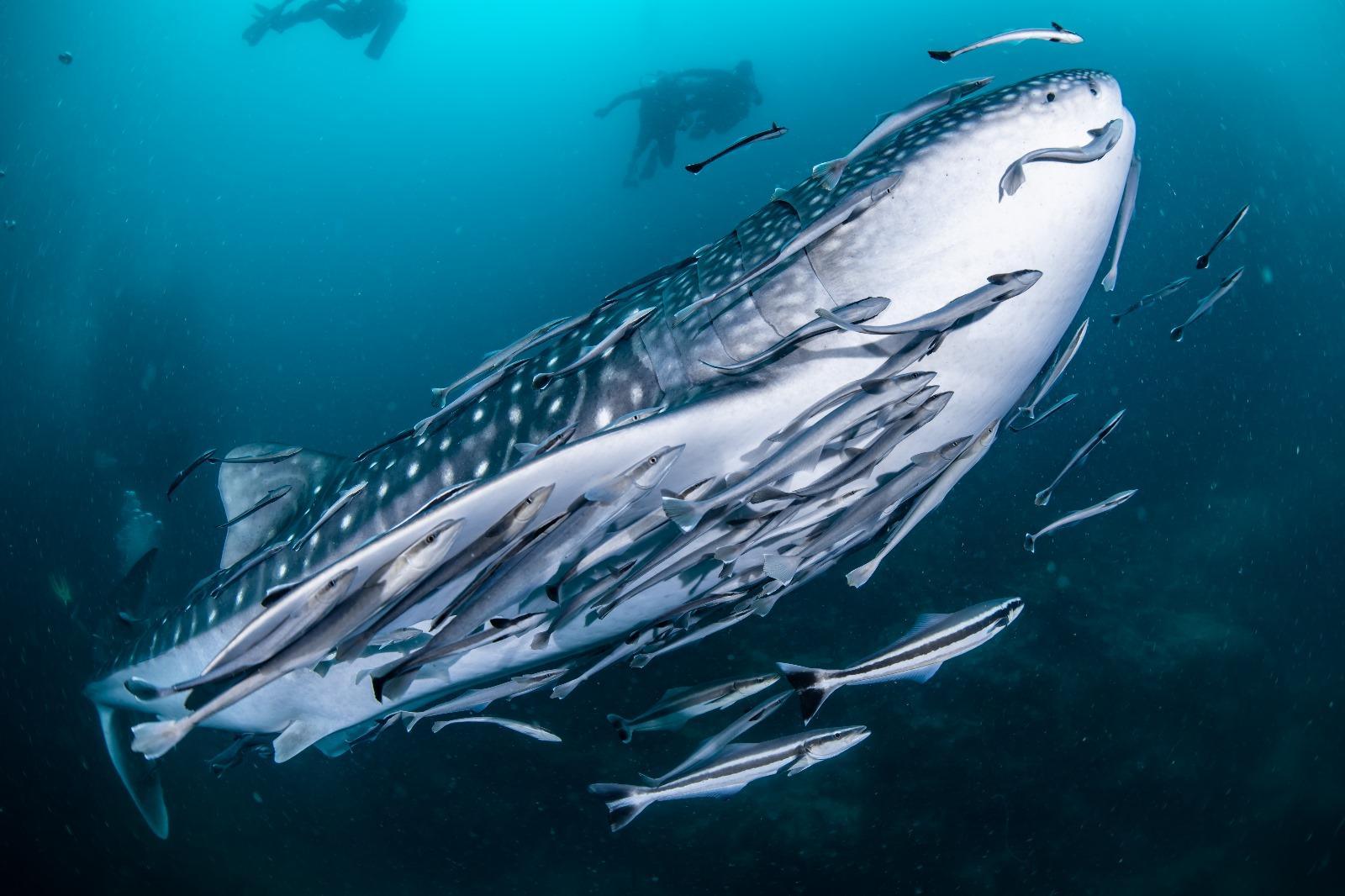
Whale shark encounters at Sail Rock peak from late March through May. Water temperatures climb to 29–30°C, phytoplankton blooms attract vast amounts of baitfish, and the whale sharks follow. A significant percentage of our trips during this window result in encounters. Not guaranteed — whale sharks are wild animals — but the odds are as high as they get in the Gulf.
April can get warm above water (32°C is common) and humidity rises, but it barely matters once you’re in. The Gulf is still excellent for diving through the entire period.
May is particularly interesting because Phuket enters its monsoon season — the Andaman Sea closes for liveaboards — while Koh Samui barely notices. The Gulf remains calm and whale shark frequency is at its very highest. Crowds also thin out from the January–March peak.
Best for: Whale shark chasers. Photographers. Experienced divers wanting marine life density. Anyone who wants excellent conditions without peak-season pricing.
June, July & August — The Overlooked Season
This is Koh Samui’s most underrated period for diving. European summer brings visitors but conditions are genuinely very good: brief afternoon showers are possible but rarely disruptive, and the Gulf stays cooperative.
Visibility drops slightly from the January–May highs — expect 12–20m rather than 15–25m — but that’s still excellent. Water temperature holds at 29–30°C. Marine life remains abundant at Chumphon Pinnacle and Koh Tao.
Whale shark frequency dips in June and July but starts to build again from August, with a secondary peak running through September. If you missed the main spring window, August–September offers another realistic shot.
The real upside: June and July are shoulder season. You’ll pay less, share the water with fewer boats, and have a more relaxed experience.
Best for: Value travellers. Repeat divers not chasing whale sharks specifically. Families with school-age kids (July–August is the school holiday window). Divers who want Koh Samui without the January crowds.
September & October — Proceed With Knowledge
September is a transitional month. The diving is generally fine in the first half but becomes increasingly variable as the northeast monsoon builds from the second half of the month. You’ll have excellent days interspersed with choppy ones.
October is when the Gulf begins to turn properly. Dive trips still run but sea conditions can be rough, visibility dips to 8–15m, and some days are cancelled. If October is your only window, do book — it’s not hopeless — but be mentally prepared for a cancelled day and consider travel insurance that covers activity interruption.
The silver lining: October and early November see a second whale shark window. Sightings are less consistent than the spring peak but they do happen, and when the sea cooperates, the diving can be brilliant.
Best for: Flexible travellers. Those with experience managing uncertainty. Divers for whom whale sharks are a nice bonus, not the mission.
November — The Honest Answer: Think Twice
We’d rather be honest than lose a booking to a bad experience. November is Koh Samui’s wettest month, full stop. The northeast monsoon is at full strength, the east coast takes heavy rain, and sea conditions on the Gulf are often rough. Dive trips run when the weather allows but cancellations are common and advance planning is difficult.
If November is unavoidable, the west and north coasts of Samui are considerably more sheltered than Chaweng. And if diving is the primary objective, Phuket is the right call in November — the Andaman has just entered its beautiful dry season.
That said: we’ve had perfectly gorgeous November days. The monsoon isn’t a solid wall of rain. It’s just unpredictable.
Best for: Budget hunters who can handle flexibility. Divers who have already experienced the Gulf at its best and want a challenge. People who genuinely cannot travel any other month.
December — Recovery
Early December can still be unsettled, but the northeast monsoon eases through the month. By mid-December conditions are improving, and by Christmas Koh Samui is typically lovely — clear skies, calm Gulf, good visibility. It’s not January, but it’s comfortably diveable and the festive atmosphere is hard to beat.
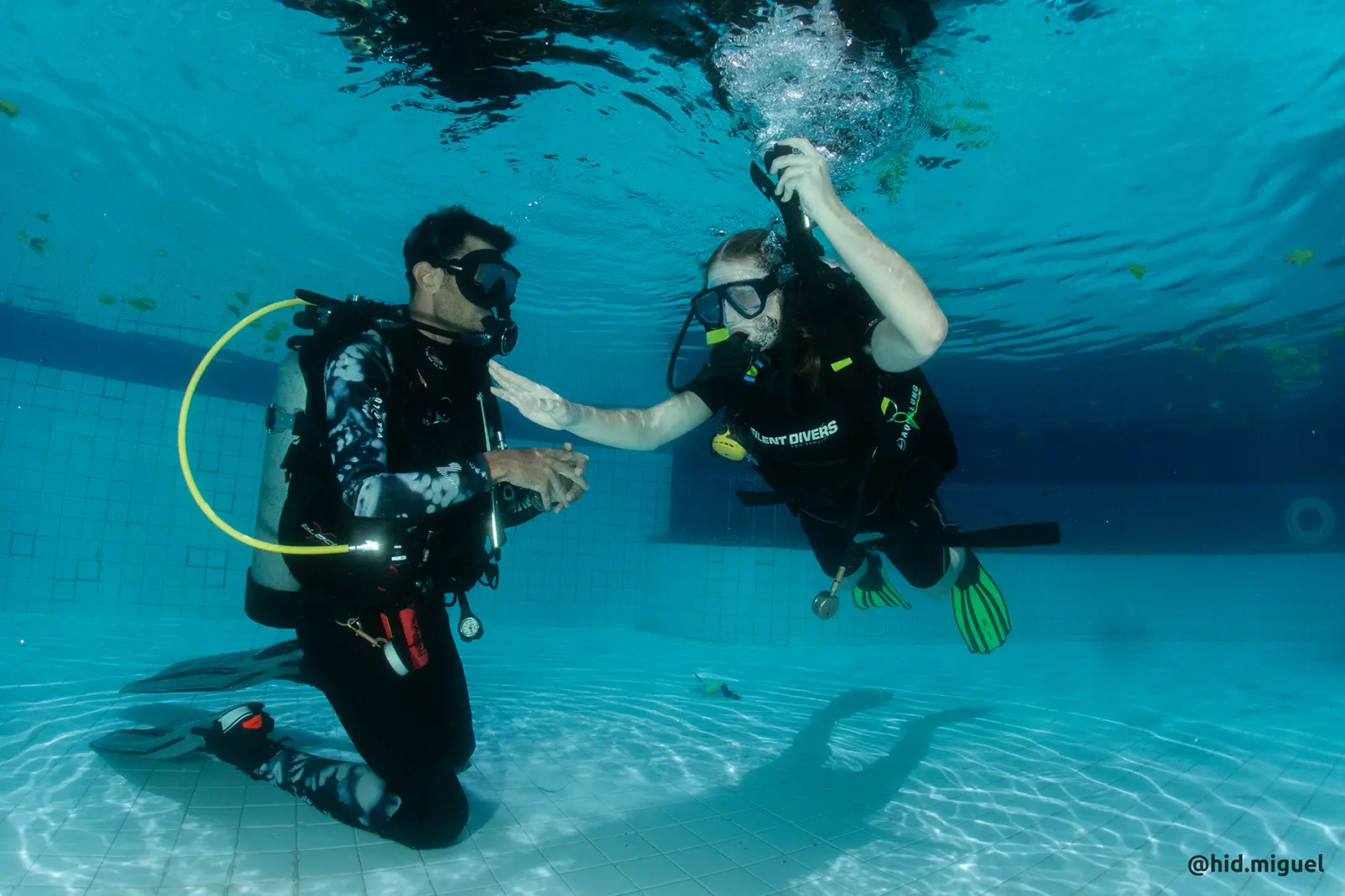
December is also a great time to get your PADI certification done if you’re heading into the January peak wanting to be already certified for fun dives.
Best for: Christmas and New Year travellers. People who want good (if not peak) diving without paying February prices.
The Dive Sites: Do Conditions Vary Across Them?
Yes — and it matters.
Sail Rock is the site most exposed to northeast monsoon conditions. It sits in open water between Koh Samui and Koh Phangan, and when the Gulf is rough, it shows. In October–November, some Sail Rock days are cancelled even when conditions elsewhere are fine.
Chumphon Pinnacle is further north and slightly more sheltered. Its canyon walls are dramatic year-round.
Koh Tao dive sites are largely sheltered by the island itself — the 90-minute crossing can be rough, but once you’re in the bays around the island, conditions are generally better than the open Gulf.
Ang Thong Marine Park sits to the west of Koh Samui and is considerably more sheltered from the northeast monsoon. It can be diveable on days when Sail Rock is not.
Water Temperature: What to Wear
The Gulf of Thailand runs warm: 27–30°C year-round with very little variance. Here’s our recommendation by season:
- January–March: 3mm wetsuit or shorty — the water is comfortable but a 60-minute dive will cool you down
- April–October: Rash guard or 1–2mm shorty if you’re cold-sensitive; many divers go without
- November–December: 3mm wetsuit — water dips to 27°C and the surface chop makes you feel colder