One of the most common questions we get from families visiting Koh Samui: “Can my child dive with us?”
The answer, in most cases, is yes — and the experience tends to be more memorable for the child than almost any other activity a Thai holiday throws at them. The Gulf of Thailand is warm, clear, and full of extraordinary marine life. Watching a 12-year-old discover what’s below the surface for the first time is something parents remember.
But the junior diving pathway is different from the adult one in some important ways, and understanding those differences helps you make the right call for your child.
What Age Can Children Start Scuba Diving?
PADI sets the following minimum ages:
| Course | Minimum Age | Certified To |
|---|---|---|
| Bubblemaker (pool only) | 8 | — (not a certification) |
| Seal Team (pool specialties) | 8 | — (pool activities only) |
| PADI Junior Open Water Diver | 10 | 12m (age 10–11) / 18m (age 12–14) |
| PADI Junior Advanced Open Water | 12 | 30m (supervised) |
| PADI Junior Rescue Diver | 12 | — |
| Adult Open Water Diver | 15 | 18m |
For practical purposes at Silent Divers, the relevant courses are:
Age 10–14: Junior Open Water Diver — a full certification allowing supervised independent diving Age 12–14: Junior Advanced Open Water Diver — the same as adult AOWD, supervised
PADI Junior Open Water Diver (Age 10–14)
The Junior Open Water Diver course is identical in content to the adult Open Water Diver — the same knowledge modules, the same confined water skills, the same number of ocean dives. The difference is in the depth limits and supervision requirements, which vary by age:
Ages 10–11:
- Maximum depth: 12 metres
- Must dive with a PADI professional or a certified parent/guardian (adult) at all times
- Certified to dive at sites appropriate to the 12m limit
Ages 12–14:
- Maximum depth: 18 metres — the same as the adult Open Water
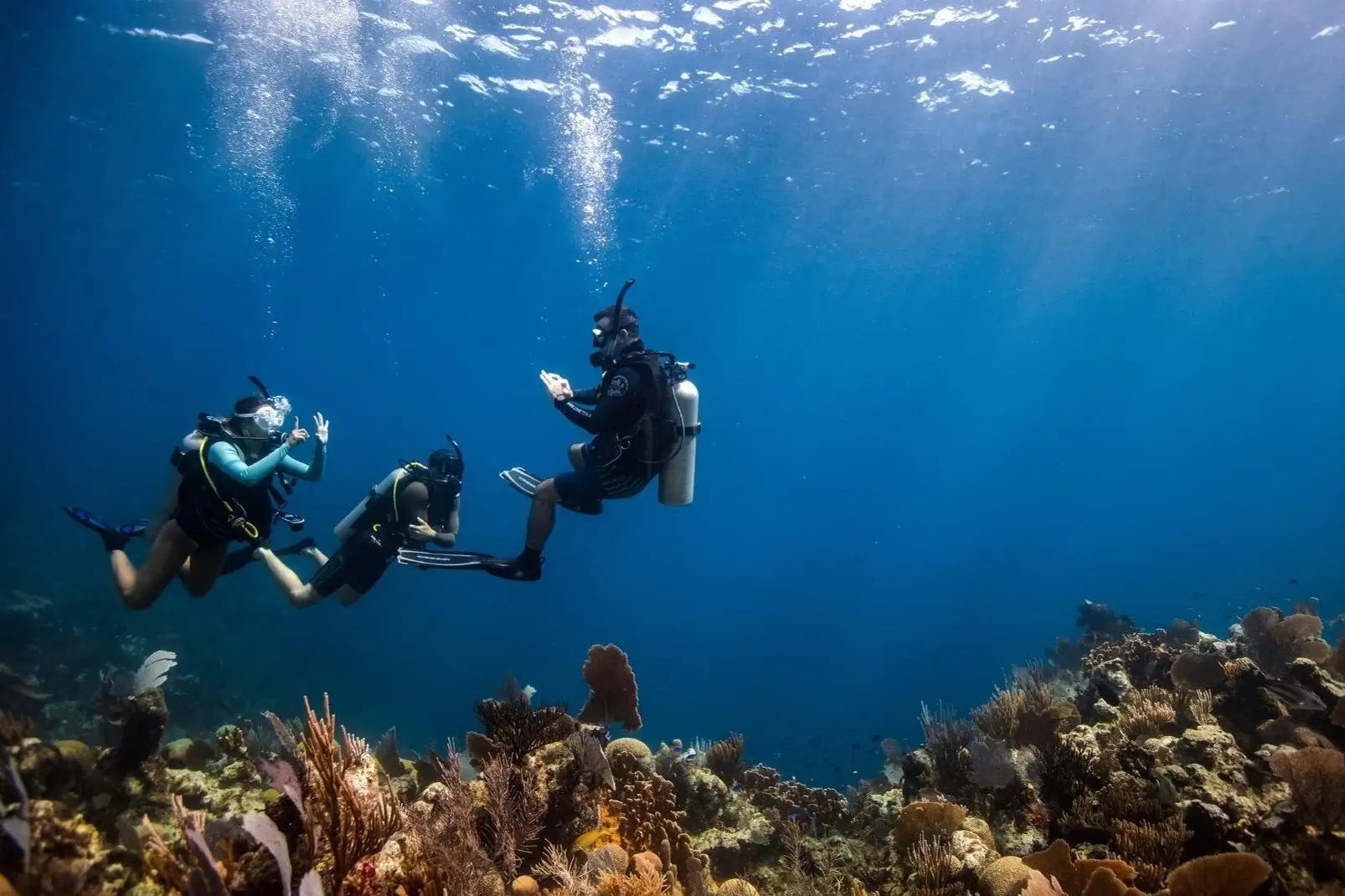
- Must dive with a certified adult diver (parent, guardian, or our dive guide)
- The adult doesn’t need to be a PADI professional — any certified diver qualifies
At 15: The Junior OWD automatically upgrades to a full adult Open Water Diver certification. No extra course, no exam, no fee.
What the Course Involves
The Junior Open Water course follows the same structure as the adult version:
- eLearning: Online knowledge modules completed before starting the pool sessions. Available in English, Thai, Chinese, and many other languages.
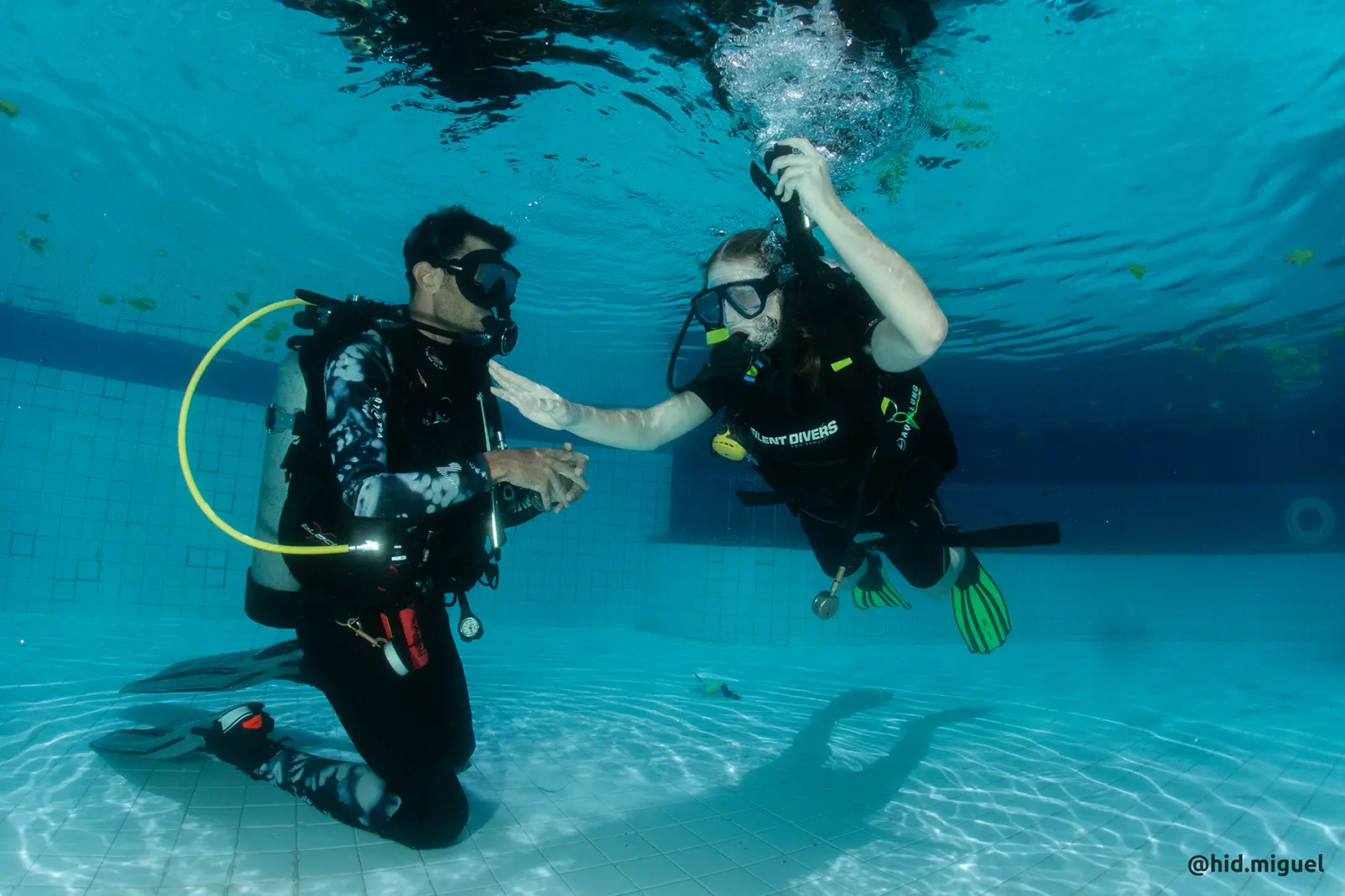
- Confined water sessions: Skills practice in a pool or sheltered bay. Mask clearing, regulator recovery, buoyancy, buddy procedures.
- 4 open water dives: Training dives in the Gulf of Thailand at local Koh Samui sites.
The full course takes 3 days. Children who do their eLearning thoroughly in advance often progress faster through the pool sessions — the background understanding helps.
What’s included with Silent Divers: eLearning materials, all equipment (including junior-sized gear), hotel transfers, boat lunch, professional PADI instructor, certification fees, and dive insurance. ฿18,200.
Is My 10-Year-Old Ready?
Age eligibility and readiness are different things. The questions to honestly ask:
Is your child comfortable in water? Not necessarily a strong swimmer — but comfortable. Happy with their face in water, unafraid of depth, no strong anxiety about being out of their depth. A child who is genuinely water-phobic will struggle; a child who is confident in a pool and the sea is usually fine.
Can they follow instructions? The skills are simple, but they require listening and following a sequence. If your child can follow step-by-step instructions in a calm environment, they’ll manage fine.
Do they actually want to do this? Enthusiasm matters enormously. A child who is genuinely excited about diving will push through any momentary discomfort. A child who is doing it because mum wants them to will likely find the pool sessions harder.
Physical minimum: PADI requires swimming 200m and floating/treading water for 10 minutes. These are light requirements that most children meet.
PADI Junior Advanced Open Water Diver (Age 12–14)
Once a child has their Junior Open Water, the next step — available from age 12 — is the Junior Advanced Open Water Diver. This is the same course as the adult Advanced Open Water Diver: 5 adventure dives including mandatory Deep and Navigation dives, plus 3 electives.
Depth limit: 30m — the same as the adult certification
The “junior” designation affects one thing: a certified adult must be in the water for all open water dives. This is not a lesser certification — it’s the same globally recognised PADI qualification. The adult requirement simply formalises the supervision reality for younger divers.
At 15: The Junior AOWD automatically upgrades to the full adult Advanced Open Water Diver. The certification carries over without any additional training.
Doing Parent and Child Courses Simultaneously
A popular option: parent and child certifying together. If a parent doesn’t have their certification, they can do their Open Water Diver or Advanced Open Water course alongside the child’s junior course, scheduling ocean dives together. It’s a genuinely memorable shared experience — and it means the parent is the certified adult in the water for the child’s ongoing dives.
Ask us about scheduling combined programmes when you enquire. We coordinate these regularly.
What Kids Actually See and Experience
Children’s reactions to the reef are different from adults’. They notice different things, move differently in the water, and tend to have less filtered reactions — which makes them wonderful dive buddies.
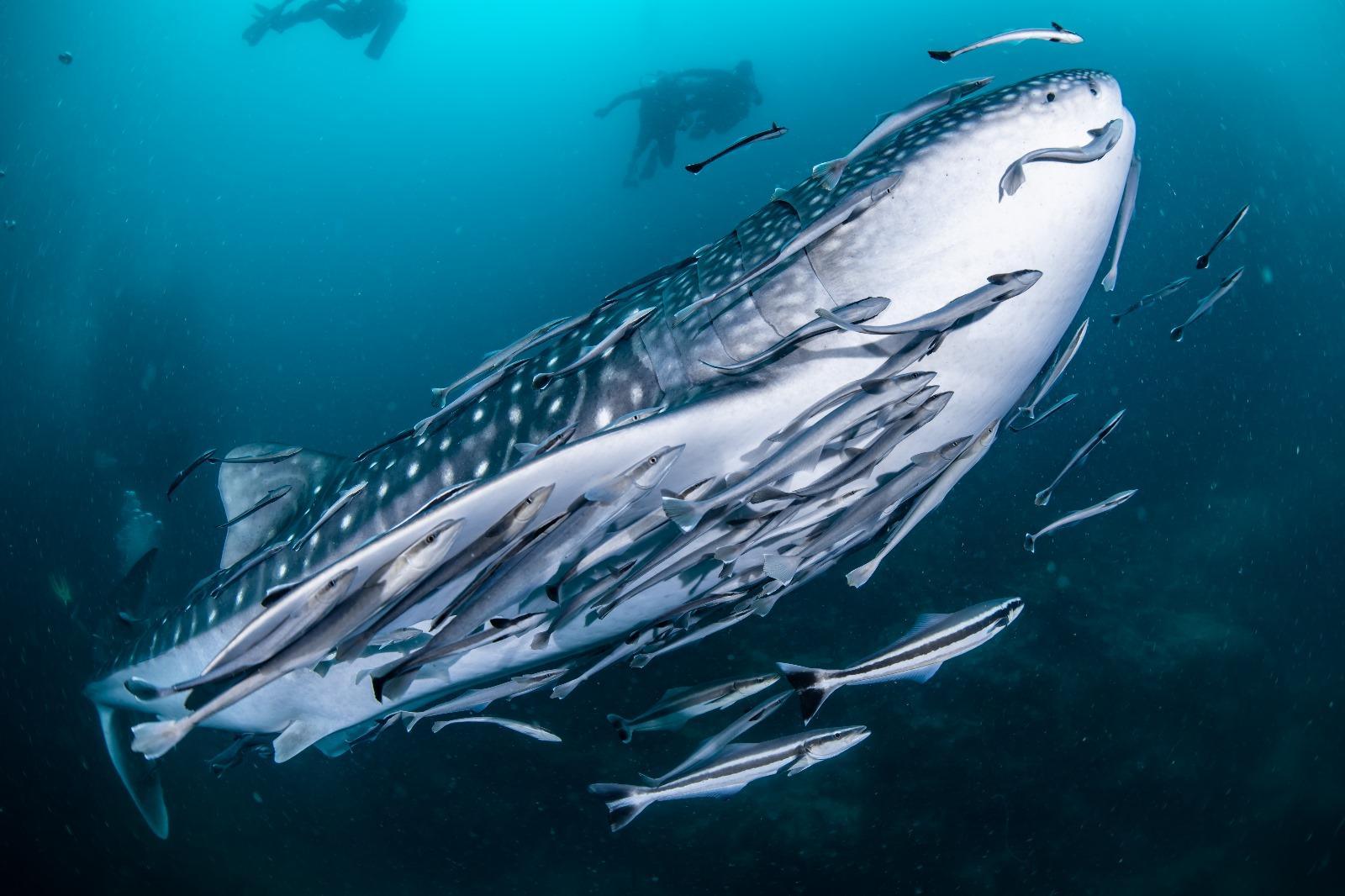
The Gulf of Thailand is rich in exactly the things young divers love: colourful fish in extraordinary abundance, sea turtles that lumber past without concern, moray eels peering from cracks in coral, the occasional cuttlefish doing its colour-changing trick. At Koh Tao, Ang Thong Marine Park, and even Sail Rock for older/more experienced junior divers — there is simply a lot to see.
The depth limits for young divers don’t significantly constrain the experience. Most of what makes Gulf of Thailand diving great happens between 5 and 18 metres — the depth range that even 10-year-olds can access.
Practical Logistics for Families
Equipment: We carry junior-sized equipment — masks, fins, wetsuits, BCDs in smaller sizes. Confirm when you book that your child’s approximate height and weight is known so we can have the right gear ready.
Supervision at sea: During fun dive trips with a certified junior diver, our dive guide acts as the required certified adult in the water. You don’t need to be a diver yourself to bring a Junior OWD-certified child on a fun dive trip — though obviously it’s more fun if you dive together.
Certification card: PADI issues cards digitally. The junior diver card is the same format as adult cards — it looks and functions identically at dive centres worldwide.
What parents ask about medical forms: Children complete the same PADI medical questionnaire as adults. For children with medical conditions — asthma, heart conditions, ear problems — a doctor’s clearance is required before training. Ear equalisation during descent can be tricky for some children (and adults); the solution is always going slowly, and instructors are patient with this.
The Discover Scuba Diving Option for Younger Children
If your child is under 10 or simply not ready for a certification course, the PADI Discover Scuba Diving experience is available from age 10 and gives a genuine taster of scuba diving without the commitment of a full course. Pool session, brief safety briefing, guided ocean dive to about 12m — no certification at the end, but a genuine underwater experience that tells you clearly whether the child loves it.
Many families use DSD as a test run: if the child comes up buzzing, they start the Junior OWD course the next day.