Koh Samui is one of the best places in the world to learn to scuba dive. The Gulf of Thailand is warm, calm, and clear. The marine life is extraordinary. And because you’re already on holiday, the pace of learning is unhurried — you’re not squeezing a course between work meetings. You’re doing it properly.
This guide covers everything: which course to start with, what the process actually looks like day by day, what it costs, how long it takes, and what you unlock once you have your certification card in hand.
Which PADI Course Should You Start With?
There are a few entry points into scuba diving, and choosing the right one saves you time and money.
Discover Scuba Diving (DSD) — No Certification, One Day
The PADI Discover Scuba Diving experience is not a certification course — it’s a one-day introduction for people who want to try diving before committing to a full course. You do a brief safety briefing, learn the basics in the pool or confined water, and then do a guided ocean dive to about 12 metres with an instructor.
Choose DSD if:
- You’ve never been underwater with scuba gear and want to try it before investing in a full course
- You only have one day and want some kind of diving experience
- You’re unsure whether scuba is for you
Don’t choose DSD if:
- You know you want to be a certified diver — DSD counts for nothing toward certification
PADI Open Water Diver — The Full Certification
The PADI Open Water Diver course is the world’s most popular scuba certification and the standard entry point for anyone who wants to dive independently. Three to four days, four open water training dives, and you leave with a globally recognised certification that never expires.
This is the right choice for most people.
You’ll be certified to:
- Dive independently with a buddy (no instructor required) to 18 metres
- Rent equipment at any dive centre worldwide
- Continue into further PADI courses (Advanced, Rescue, etc.)
- Join fun dive trips anywhere in the world
Choose OWD if:
- You want a proper certification that lets you dive worldwide
- You have three to four days available
- You’re fairly sure you’ll enjoy scuba diving (if completely unsure, do the DSD first)
PADI Scuba Diver — The Halfway Option
The PADI Scuba Diver qualification is an intermediate certification — essentially the first half of the Open Water course. You complete two ocean dives and get a certification that allows you to dive to 12 metres, but only under the direct supervision of a PADI professional.
Choose Scuba Diver if:
- You only have one or two days and can’t complete the full Open Water
- You plan to come back and finish the full OWD later
- You want more than a DSD but can’t do the full course on this trip
Note: the Scuba Diver qualification counts fully toward the Open Water when you return, so there’s no backtracking.
The PADI Open Water Course: Step by Step
Here’s what the three to four days actually look like.
Before You Arrive: eLearning
PADI Open Water now uses an online learning platform (eLearning) that you complete before your first day of diving. It covers the theory — how scuba equipment works, the physics of pressure underwater, dive planning, safety procedures, and the laws of diving physics.
You can do this from your hotel room, from home before your holiday, even on the plane. It takes around 8–10 hours across several modules, though you can work at your own pace. Once completed, you get a code that allows your instructor to see your progress.
Do the eLearning before you arrive. It dramatically improves your first pool session — you already understand why things work the way they do, so the instructor isn’t repeating theory you should have read. Most students who do eLearning in advance complete their course faster and more confidently.
Day 1: Confined Water (Pool) Sessions
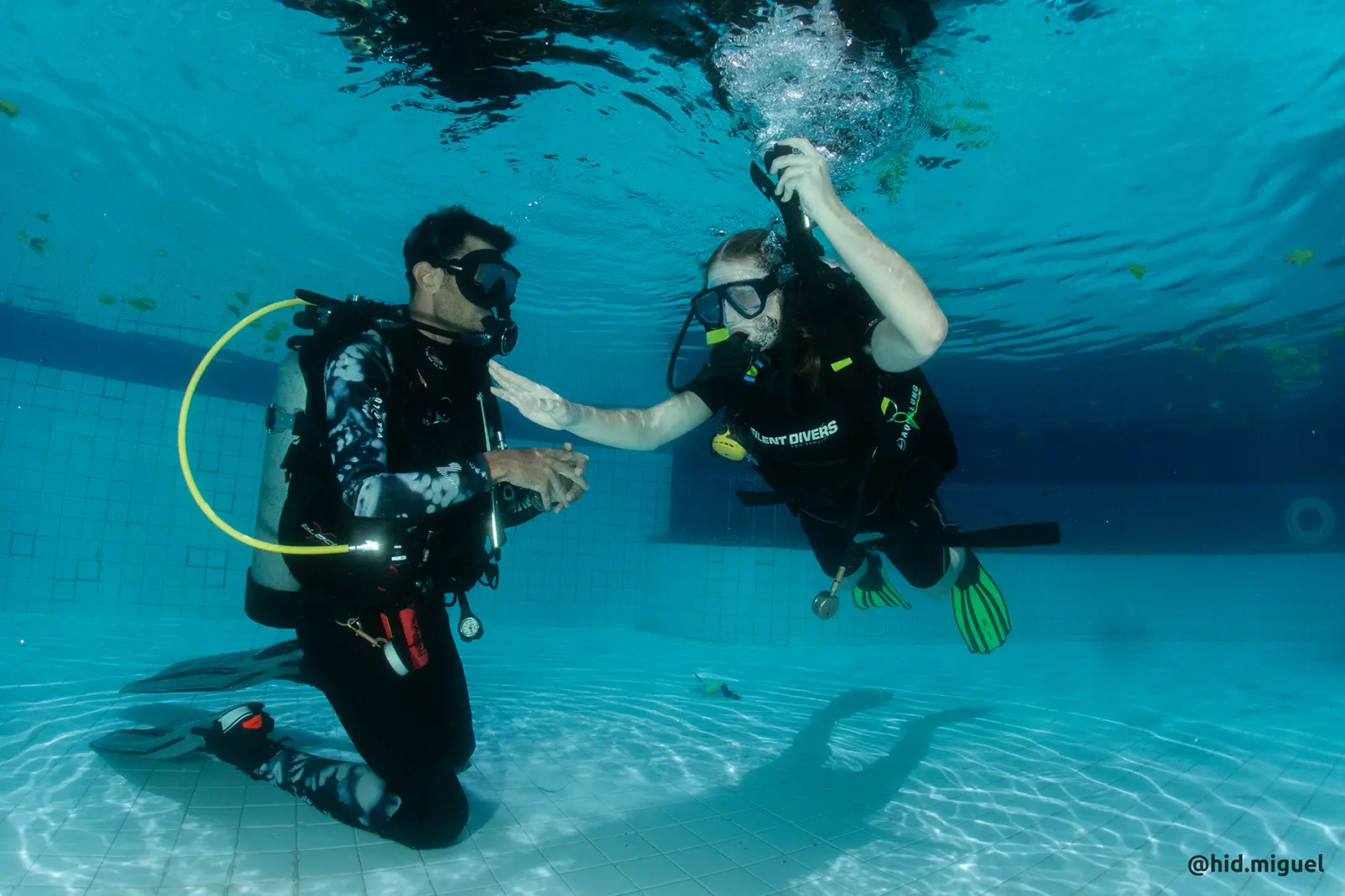
Your first day is in the pool or a confined water area — calm, shallow, no currents. You practice all the core skills that will be performed again in the ocean: mask clearing, regulator recovery, buoyancy control, emergency ascents, and buddy checks.
This is the session people are most nervous about and almost always leave from feeling surprised by how manageable it was. The skills look intimidating written down; in warm, shallow water with an instructor right next to you, they click quickly.
You’ll typically complete three or four pool sessions across the morning, then have the afternoon free. Some students complete all five pool sessions in day one if they’re confident; others spread across days one and two. There’s no rush.
Ocean Dives 1 & 2
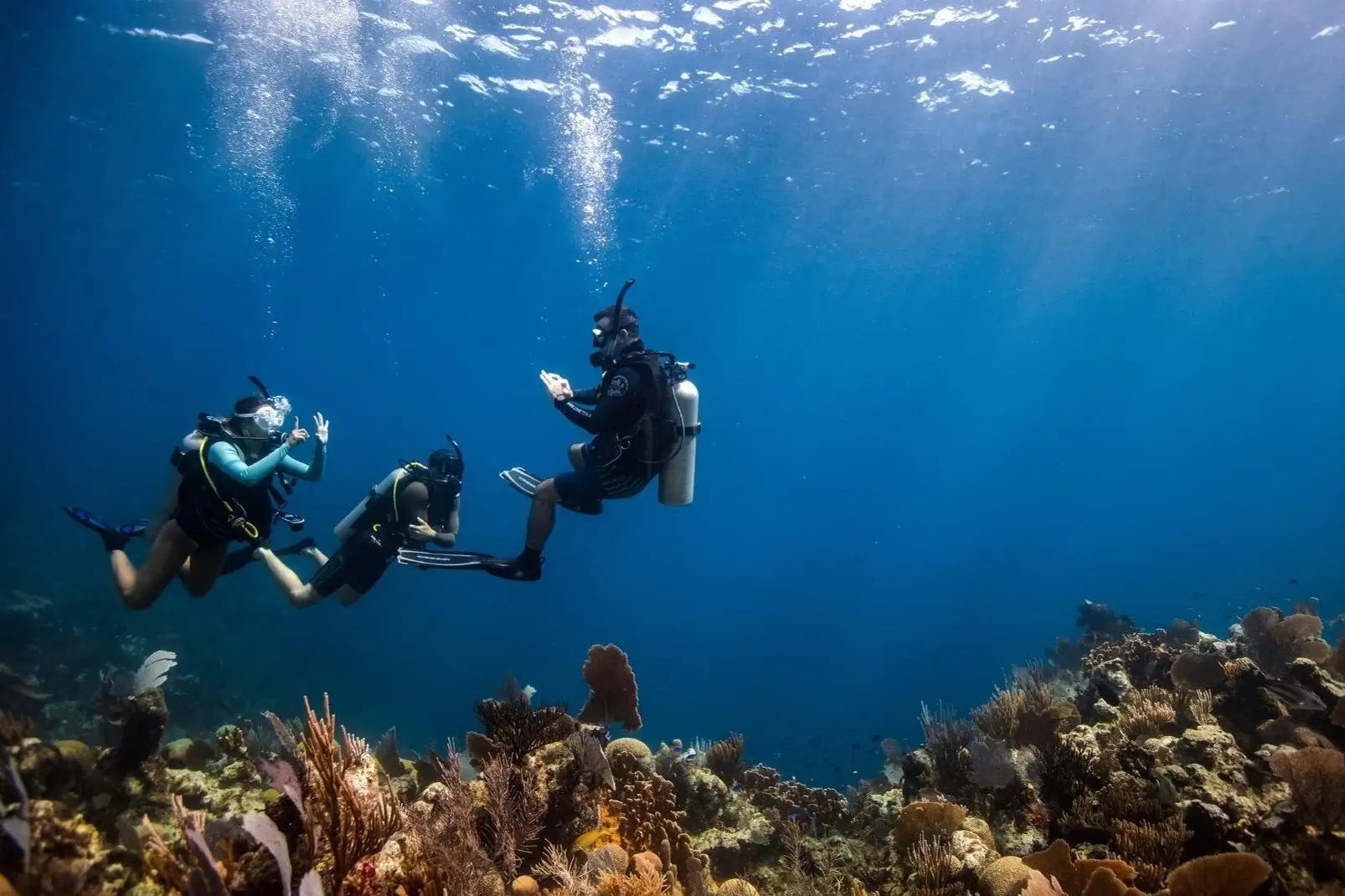
Usually on day two, you do your first two open water training dives in the Gulf of Thailand. These are shallower — typically 5–12m — and involve repeating the pool skills in the real ocean. You’re not just performing skills, though; you’re also experiencing the reef, the fish, and the feeling of being properly underwater.
These dives take place at local sites off Koh Samui. By the end of the day, most students have completely fallen in love with the whole thing.
Ocean Dives 3 & 4
Usually on day three, sometimes day four. These dives go deeper — up to 18m — and have a different character. You’re using your skills naturally rather than performing them as exercises. Navigation. Buoyancy. Planning your air consumption. By dive four, you’re starting to dive rather than just practicing.
For many students, the third and fourth dives represent a shift in mindset — from nervous student to actual diver. You’ll notice it yourself.
After dive four, your instructor confirms you’ve completed all required skills and you’re certified. Your PADI card is issued digitally within 24–48 hours.
How Long Does the PADI Open Water Course Take?
The standard course takes 3 full days, which is how we structure it:
- Day 1: eLearning complete (before arrival) + confined water sessions
- Day 2: Ocean dives 1 & 2 at local sites
- Day 3: Ocean dives 3 & 4, certification
If you need more time with any skill, day four is available. There’s no exam you fail — you simply practice until the skill is right.
Some students complete everything in two and a half days if they’ve done thorough eLearning beforehand and take to the confined water skills quickly. This can free up a half-day for a fun dive trip before you leave Samui — highly recommended.
What Does PADI Certification Cost in Koh Samui?
The PADI Open Water Diver course is ฿18,200 at Silent Divers, which includes:
- PADI eLearning materials
- All confined water sessions
- All four open water training dives
- PADI certification fees
- All scuba equipment rental
- Hotel pickup and transfers
- Dive insurance
- Lunch and drinks on boat days
There are no hidden extras. The certification card, equipment, transport — it’s all in.
The cost is comparable to other reputable PADI centres on Koh Samui. Be cautious of significantly cheaper offerings that exclude eLearning or charge separately for equipment — what looks like a ฿5,000 saving often isn’t when you add the real costs back in.
What Can You Do Once You’re Certified?
Your PADI Open Water Diver card is a global licence. With it, you can:
On Koh Samui:
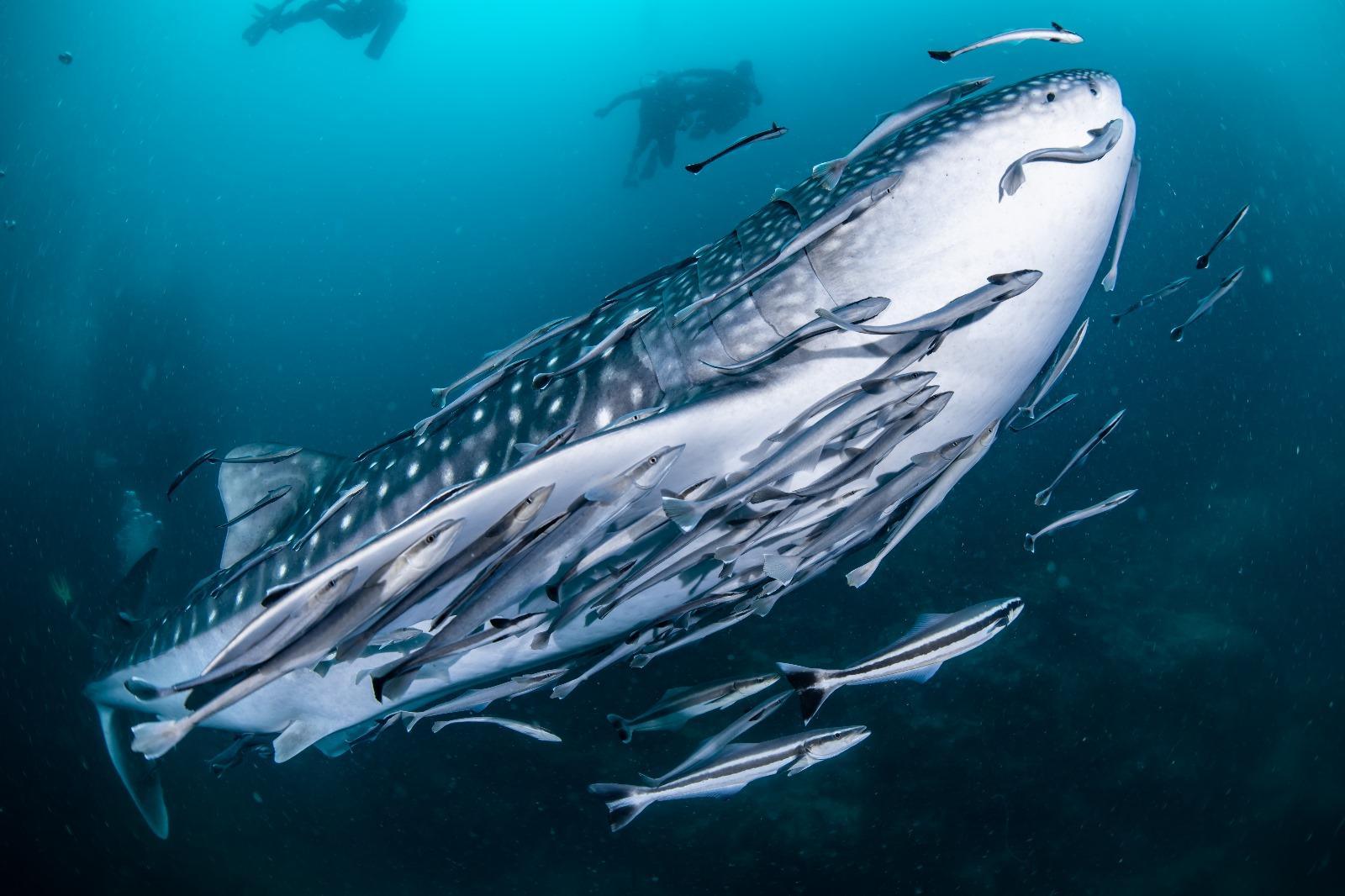
- Join our Sail Rock dive trips — two tanks, whale sharks, barracuda walls, the chimney
- Dive Koh Tao and the HTMS Sattakut wreck (Advanced recommended for the wreck)
- Explore Chumphon Pinnacle — one of the Gulf’s most dramatic sites
- Discover the pristine reefs of Ang Thong Marine Park
Worldwide:
- The Maldives, Australia’s Great Barrier Reef, the Red Sea, the Caribbean, Southeast Asia — your OWD card is accepted everywhere
Next steps in certification:
- Advanced Open Water Diver — 5 adventure dives, 30m certification, unlocks the full depth range at Sail Rock and Chumphon. Can be done immediately after OWD, as few as 2 days.
- Rescue Diver — widely considered the most personally rewarding course in recreational diving. Minimum: OWD + first aid certification.
Do I Need to Know How to Swim?
You need to be comfortable in water and able to swim 200 metres (or 300 metres with a mask and fins) and float for 10 minutes. You don’t need to be a strong swimmer or particularly fast — just comfortable. The swimming test is done at the start of your first pool session and is straightforward.
Is There a Medical Form?
Yes. PADI requires all divers to complete a medical questionnaire before training. Most people clear it without any issues. If you have certain medical conditions (heart conditions, lung conditions, recent surgeries, epilepsy, insulin-dependent diabetes), you’ll need a doctor’s sign-off before diving. This is not unusual and we’ll help you navigate it if needed.
What Should I Bring?
For the confined water and ocean sessions:
- Swimwear
- Sunscreen (reef-safe preferred)
- Towel
- Light clothing for the boat
- Sunglasses and a hat
Everything diving-related — BCD, regulator, wetsuit, mask, fins, tanks — is provided. Bring just yourself and your eagerness.