Die meisten Menschen kommen zu ihrer ersten Tauchstunde mit einer Version derselben Angst: Was, wenn ich unter Wasser in Panik gerate? Was, wenn ich den Druckausgleich nicht schaffe? Was, wenn ich vergesse, was ich tun soll?
Das ist völlig normal, nahezu universell und fast immer unnötig. Nach tausenden von Open-Water-Kursen ist das Muster bemerkenswert konsistent: Kursteilnehmer kommen nervös an, verlassen ihre erste Pooleinheit überrascht davon, wie handhabbar alles ist, und verbringen den Abend damit, jemandem zu erzählen, was sie am Riff gesehen haben.
Aber Wissen hilft. Deshalb hier eine ehrliche, detaillierte Beschreibung genau dessen, wie Ihre erste Tauchstunde abläuft.
Vor Tag Eins: Das eLearning
Ihre erste Interaktion mit dem Tauchen findet online statt, nicht unter Wasser. PADIs eLearning-Plattform behandelt die Theorie hinter dem Tauchen – wie der Druck den Körper beeinflusst, wie die Ausrüstung funktioniert, was in verschiedenen Situationen zu tun ist und die Prinzipien der Tauchplanung.
Es dauert 8–10 Stunden über mehrere Module und Sie können es von überall machen – Ihrem Hotelzimmer, Ihrem Sofa zu Hause, dem Flughafenlounge. Am Ende jedes Abschnitts gibt es kurze Wissensüberprüfungsfragen.
Das Ziel des eLearning ist nicht, alles auswendig zu lernen. Es geht darum, genug Hintergrundverständnis aufzubauen, dass wenn Ihr Ausbilder im Pool etwas demonstriert, Sie bereits Kontext dafür haben, warum es so funktioniert. Stressen Sie sich nicht über perfekte Ergebnisse. Lesen Sie es, verstehen Sie es, machen Sie weiter.
Das eLearning vor Ihrer ersten Pooleinheit abzuschließen lässt den Tag wirklich besser ablaufen. Kursteilnehmer, die es getan haben, sind entspannter, stellen bessere Fragen und verbringen weniger Zeit im Pool damit, Fertigkeiten zu wiederholen, die sie halb verstanden hatten.
Tag Eins: Die Pooleinheit
Ausrüstung anlegen
Ihre erste Pooleinheit beginnt mit der Ausrüstungsanpassung. Ihr Ausbilder zeigt Ihnen jedes Ausrüstungsstück:
- BCD (Buoyancy Control Device): Die Jacke, die Ihren Tank hält und Ihren Auftrieb kontrolliert. Sie füllt sich und entleert sich. Sie werden sie ständig benutzen.
- Atemregler: Das Gerät, das Luft von Ihrem Tank zu Ihrem Mund liefert. Erste Stufe, zweite Stufe, Atemreglerersatz – Ihr Ausbilder erklärt, was jede macht.
- Neoprenanzug: Im Golf von Thailand ein 3-mm-Shorty oder Vollanzug. Sie werden schnell wissen, ob Ihrer richtig sitzt.
- Maske und Flossen: Auf Sie angepasst. Die Maske sollte ohne Riemen auf Ihrem Gesicht abdichten; die Flossen sollten fest, aber nicht einengend sitzen.
In Ihre Ausrüstung zu steigen ist anfangs etwas komödiantisch – BCDs sind schwer und unvertraut, Schläuche gehen überall hin, und man fühlt sich an Land leicht lächerlich. Dieses Gefühl verschwindet in dem Moment, in dem man im Wasser ist.
Das erste Mal unter Wasser atmen
Das Erste, was Ihr Ausbilder tun wird, ist, Sie im flachen Bereich zu platzieren, Ausrüstung bis auf Maske und Atemregler ab, und Sie durch den Atemregler mit dem Gesicht im Wasser atmen zu lassen.
Das ist der entscheidende Moment. Das Geräusch, das Gefühl des Ein- und Ausatmens durch den Atemregler, die Art wie die Blasen um Ihren Kopf klingen – es ist unvertraut und dann ist es das nicht mehr. Die meisten Menschen verbringen etwa 30 Sekunden mit der Anpassung und entspannen sich dann. Einige brauchen ein paar Minuten. Eine sehr kleine Anzahl (wirklich selten) hat das Gefühl, sich damit nicht ganz entspannen zu können – in diesem Fall macht der Ausbilder eine Pause, coacht und wartet.
Es läuft keine Uhr. Der erste Atemzug unter Wasser ist das Fundament, auf dem alles andere aufbaut, und Ihr Ausbilder bleibt so lange im flachen Bereich, wie es dauert.
Die Kernfertigkeiten
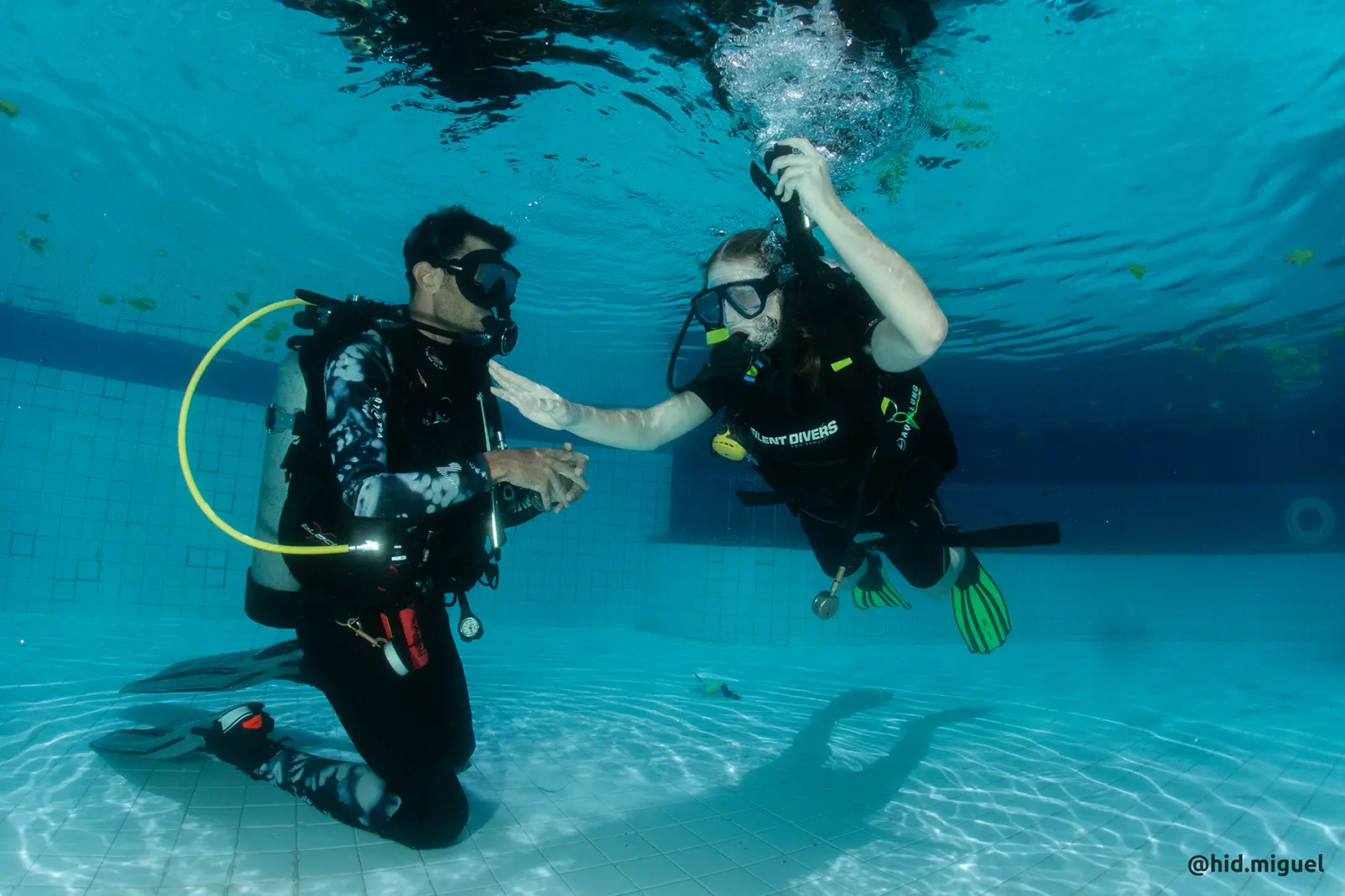
Sobald Sie sich mit dem Atmen wohl fühlen, arbeiten Sie eine Reihe von Fertigkeiten im flachen Pool durch. Das sind dieselben Fertigkeiten, die Sie im Ozean wieder demonstrieren werden – aber im Pool können Sie aufstehen, die Füße auf den Boden setzen, und Ihr Ausbilder ist nah.
Maskenabnahme: Sie fluten Ihre Maske mit Wasser und leeren sie, indem Sie durch die Nase ausatmen, während Sie den Kopf zurückneigen. Es klingt schrecklich; es ist tatsächlich einfach. Der Trick ist das kräftige statt zögerliche Ausatmen.
Atemreglerwiederherstellung: Sie nehmen absichtlich Ihren Atemregler heraus und holen ihn zurück. Es gibt eine Technik für jede Methode. Beim dritten Üben ist es automatisch.
Auftriebskontrolle: Sie üben, im Wasser zu schweben – weder zum Boden sinkend noch zur Oberfläche steigend. Diese braucht Zeit. Neue Taucher sind fast immer überbleit und ungeschickt. Das ist völlig normal und verbessert sich in Ihren ersten Freiwassertauchgängen dramatisch.
Buddy-Check: Der Vorher-Tauchgang-Sicherheitscheck, den Sie mit Ihrem Tauchpartner vor jedem Tauchgang machen. Es gibt eine Eselsbrücke: BWRAF (Begins With Review And Friend). Sie werden es bis Ende Tag eins auswendig können.
Notaufstiege und Atemlosvorgehen: Was zu tun ist, wenn Ihnen die Luft ausgeht oder es ein Ausrüstungsproblem gibt. Diese werden ruhig im Pool geübt. In der echten Welt sind sie selten. Im Training werden sie zur zweiten Natur.
Die Pooleinheit dauert typischerweise einen Morgen. Die meisten Kursteilnehmer schließen alle fünf erforderlichen Flachwassertauchgänge über die Tage eins und zwei ab, aber einige – besonders diejenigen, die den Auftrieb schnell erlernen – schließen alles in einem langen Pooltag ab.
Ihr erster Freiwassertauchgang
Nach Ihren Pooleinheiten (normalerweise Tag zwei) machen Sie Ihre ersten zwei Freiwasser-Ausbildungstauchgänge. Das ist, wenn sich alles komplett ändert.
Das Briefing
Vor jedem Tauchgang gibt es ein Briefing. Ihr Ausbilder behandelt den Platz – was Sie sehen werden, das Tiefenprofil, etwaige Strömungen, Handzeichen und welche Fertigkeiten Sie unter Wasser üben werden. Hören Sie zu; das Briefing ist die Karte Ihres Tauchgangs.
Sie machen auch Ihren Buddy-Check vor dem Eintauchen ins Wasser. BWRAF. Machen Sie es ordentlich.
Der Einstieg
Von unserem Boot aus ist der Standard-Einstieg ein Giant Stride – ein großer Schritt von der Plattform, mit Flossen flach im Wasser landend. Es ist der Standard-Einstieg, der von Tauchern weltweit verwendet wird, und sieht dramatischer aus als es sich anfühlt. Sie tauchen sofort auf und geben das OK-Zeichen.
Alternativ können Sie für flachere Flachwassereinsteige hineinwaten.
Abtauchen
Sie halten die Abstiegsleine, lassen Luft aus Ihrem BCD und gehen hinunter. Ihre Ohren werden fast sofort den Druck spüren – das ist der Druckausgleich, nach dem alle fragen.
Druckausgleich bedeutet, den Druck in Ihrem Mittelohr zu entlasten, wenn Sie tiefer gehen. Sie tun dies, indem Sie sich die Nase zuhalten und sanft blasen (die Valsalva-Technik) – dasselbe, was Sie im Flugzeug machen. Die meisten Menschen tun dies instinktiv. Eine kleine Anzahl findet es anfangs schwierig; die Lösung ist immer: etwas aufsteigen, es erneut sanfter versuchen. Langsam abzutauchen ist immer die Antwort.
Sobald Sie in der Tiefe sind, stellen Sie neutralen Auftrieb her – kleine Luftstöße in Ihr BCD hinzufügen, bis Sie mühelos schweben. Das ist die Fertigkeit, die das Tauchen wie Fliegen anfühlen lässt.
Der Tauchgang selbst
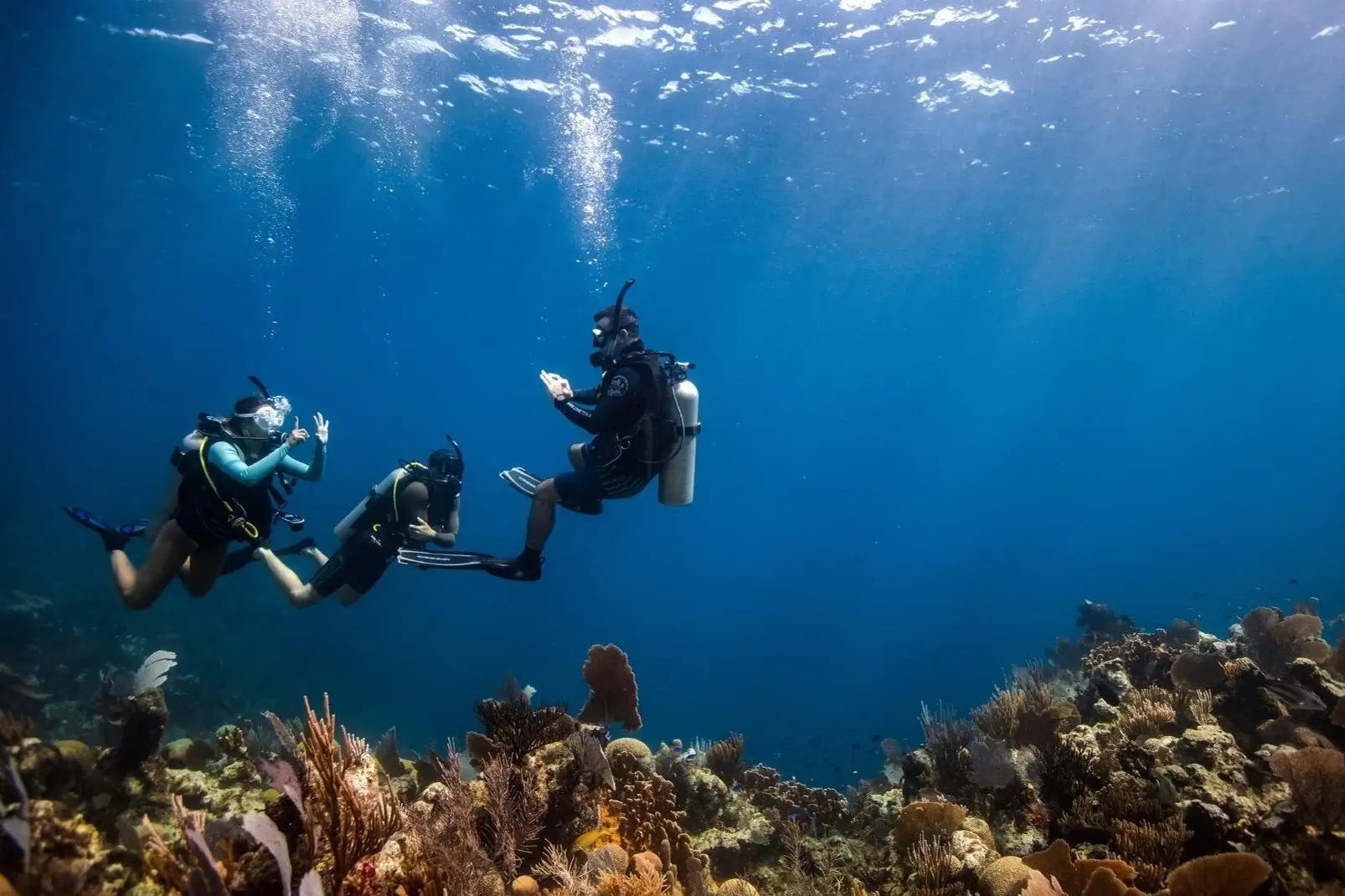
Ihr erster Freiwassertauchgang wird auf etwa 5–12 Metern sein. Sie üben einige der Fertigkeiten aus dem Pool – Maskenabnahme, Atemreglerwiederherstellung – aber Sie tauchen auch einfach. Das Riff ansehen. Fische beobachten, die nicht wissen, dass Sie da sind. Verstehen, vielleicht zum ersten Mal, warum Menschen das so überzeugend finden.
Die Standardreaktion nach dem ersten Freiwassertauchgang ist Stille, gefolgt von ein oder zwei unartikulierten Ausrufen, gefolgt von einem Strom von Fragen darüber, was man gerade gesehen hat.
Aufsteigen und Nachbesprechung
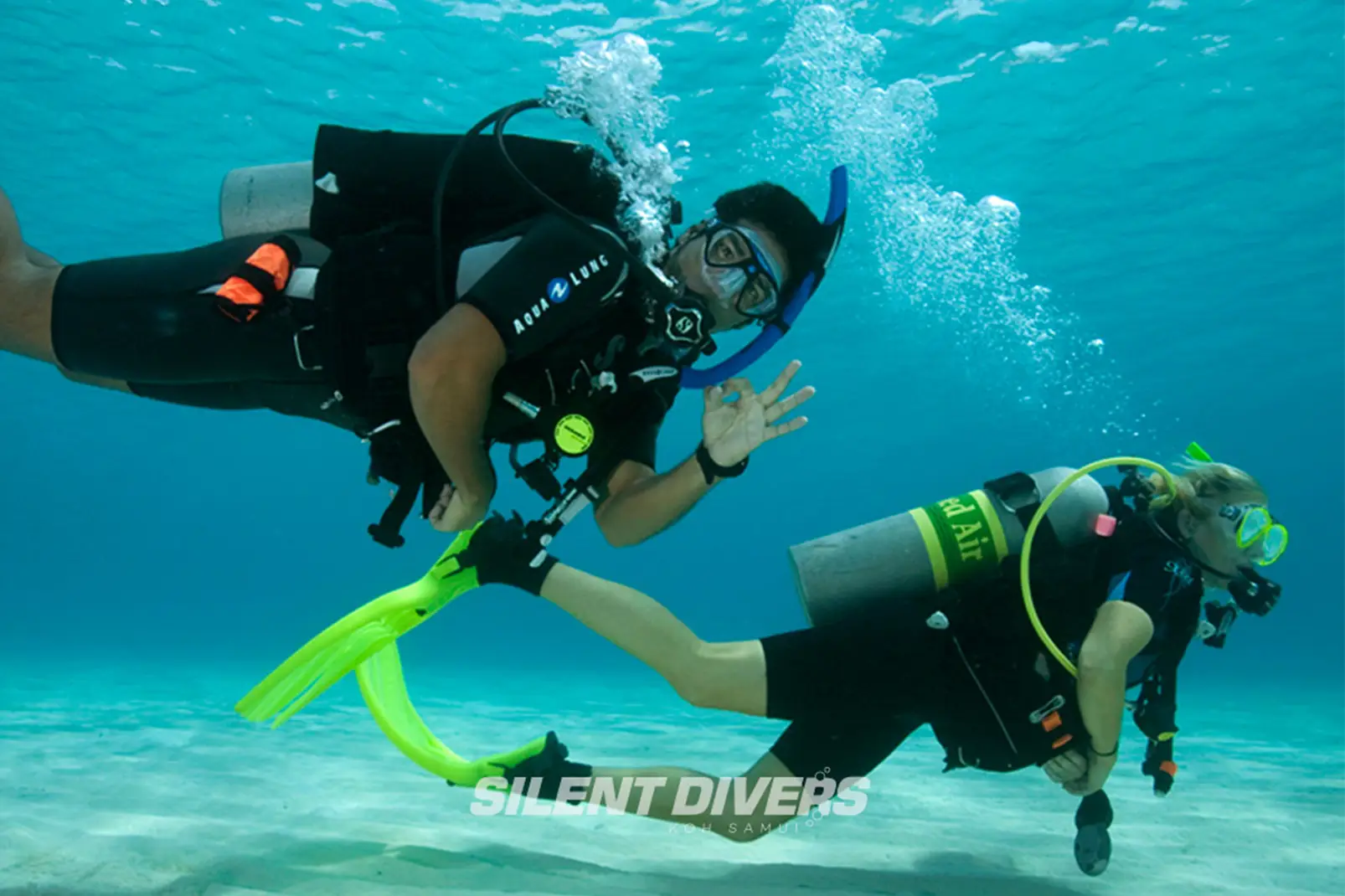
Sie steigen langsam auf (die Regel lautet: nie schneller als Ihre langsamste Blase), machen einen dreiminütigen Sicherheitsstopp auf 5 Metern und tauchen auf. Das Handzeichen, wenn Sie auftauchen: OK, einen Kreis mit der Hand über dem Kopf bildend.
Ihr Ausbilder führt eine Nachbesprechung für jeden Tauchgang durch – was gut lief, worauf man sich beim nächsten Mal konzentrieren sollte. Das ist kein Urteil; es ist eine Karte zur Verbesserung.
Was, wenn ich in Panik gerate?
Die Panikfrage. Fast alle stellen sie.
Panik unter Wasser hat fast immer einen physischen Auslöser: Luft ausgeht, Maske unerwartet geflutet, schnelles Absinken ohne Druckausgleich. Diese Auslöser sind genau das, was Ihr Training verhindern und bewältigen soll.
Das wirksamste Anti-Panik-Mittel ist Atemkontrolle. Wenn Sie sich unter Wasser unwohl fühlen, ist der Instinkt, schnell zu atmen und aufzusteigen. Die trainierte Antwort ist, das Atmen zu verlangsamen, Ihr BCD leicht aufzufüllen für Auftriebssicherheit, und Ihrem Ausbilder zu signalisieren. Dafür sind die Poolfertigkeiten – Ausrüstungsausfälle zu normalisieren, damit sie keine Panik auslösen.
In dem seltenen Fall, dass ein Kursteilnehmer unter Wasser in Not gerät, sind Ausbilder darauf trainiert, dies ruhig zu managen. Die Lösung ist fast immer: langsam gemeinsam aufsteigen, atmen, nachbesprechen. Die große Mehrheit der Kursteilnehmer, die bei Tauchgang eins in Panik geraten, gehen bei Tauchgang zwei wieder hinein und sind in Ordnung.
Häufige Erstmaler-Fragen
Kann ich unter Wasser richtig atmen? Ja. Ihr Atemregler liefert Luft auf Anfrage – jeder Atemzug ist mühelos. Die Regulierung des Atmens ist das Erste, was neuen Tauchern auffällt, normalerweise innerhalb von fünf Minuten der ersten Pooleinheit.
Tut der Druckausgleich weh? Er sollte nicht. Leichter Druck ist normal und erwartet; Schmerz bedeutet, dass Sie versuchen auszugleichen ohne Erfolg. Die Lösung ist immer: mit dem Absteigen aufhören, etwas aufsteigen, es sanfter erneut versuchen. Niemals erzwingen.
Was, wenn ich klaustrophobisch bin? Freiwasser-Tauchen ist überraschend nicht-klaustrophobisch – Sie sind im offenen Ozean, nicht in einer Höhle. Viele Menschen mit klaustrophobischen Tendenzen finden das Tauchen vollkommen komfortabel. Wenn Sie besorgt sind, ist das DSD-Erlebnis eine gute Möglichkeit, Ihre Reaktion zu testen, bevor Sie sich auf einen vollständigen Kurs einlassen.
Was soll ich tun, wenn ich aufsteigen muss? Signalisieren Sie Ihrem Ausbilder mit einem Daumen nach oben (Aufstiegssignal, nicht OK). Er wird es bestätigen und den Aufstieg führen. Sie sind unter Wasser nie gefangen – Sie kontrollieren Ihren Auftrieb und können jederzeit aufsteigen.
Muss ich körperlich fit sein? Tauchen erfordert moderate Fitness und die Fähigkeit zu schwimmen. Es ist nicht sehr aerob – besonders in der Tiefe und im Tempo eines Ausbildungstauchgangs. Menschen mit verschiedenen Fitnessniveaus, einschließlich älterer Erwachsener und Menschen mit körperlichen Einschränkungen, schließen den Kurs erfolgreich ab. Medizinische Zustände, die die kardiovaskuläre oder Atemfunktion beeinflussen, erfordern eine ärztliche Genehmigung.
Nach Ihrer ersten Stunde: Was sich ändert
Das Häufigste, was Kursteilnehmer nach ihrem ersten Pooltrainingstag sagen: „Ich weiß nicht, warum ich nervös war.”
Das ist das Muster. Die Fertigkeiten, die auf dem Papier technisch aussehen, werden im Wasser schnell natürlich. Das Atmen, das seltsam schien, wird automatisch. Am Ende Ihrer Freiwassertauchgänge denken Sie nicht mehr an Ausrüstung – Sie suchen nach Schildkröten.
Buchen Sie Ihren PADI-Open-Water-Kurs in Koh Samui und finden Sie heraus, was da unten ist.