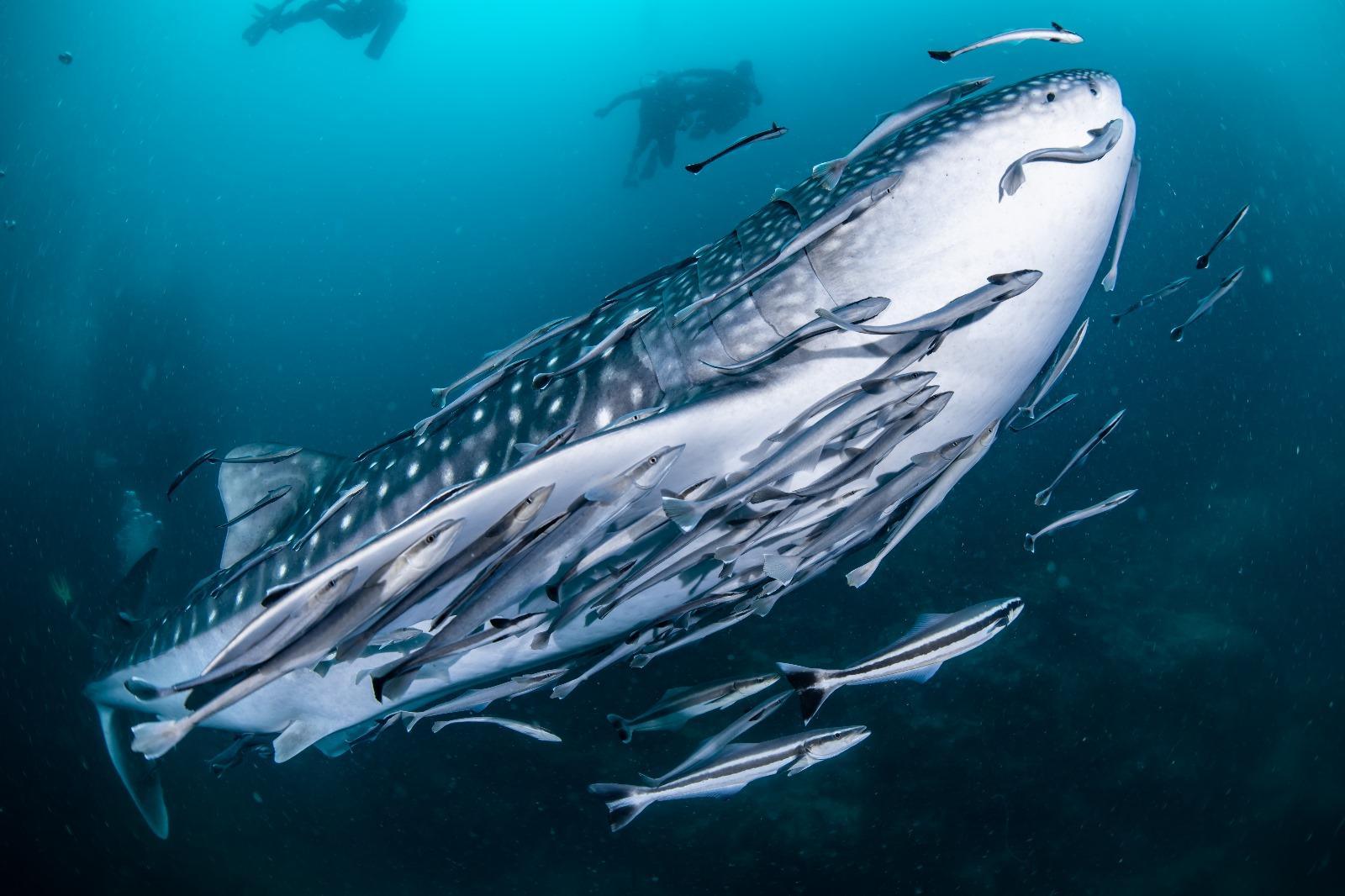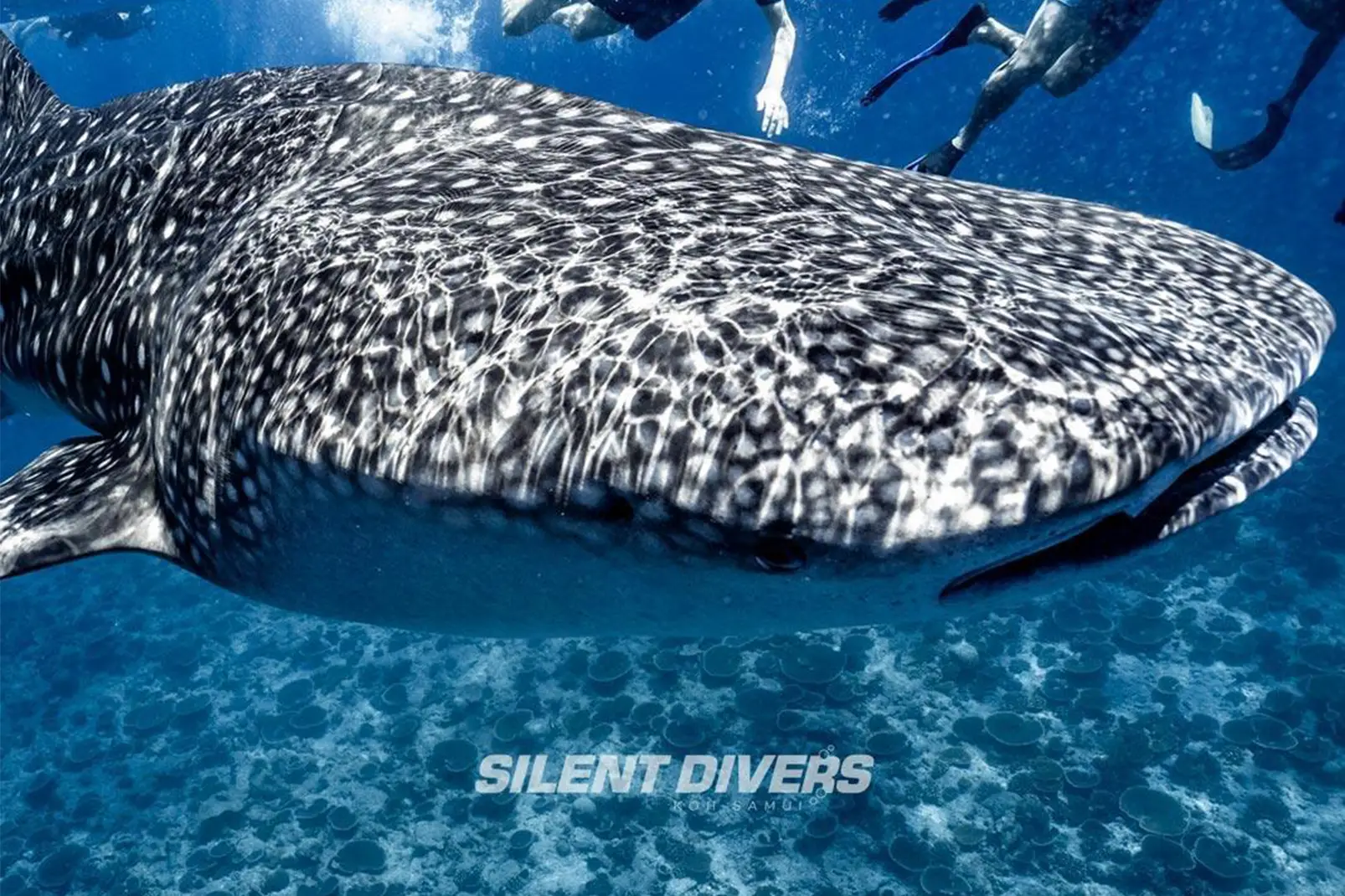
Les requins baleines sont la raison pour laquelle beaucoup de gens choisissent de plonger dans le Golfe de Thaïlande. Non pas parce qu’ils sont garantis — rien dans la nature ne l’est jamais — mais parce que Sail Rock a l’un des meilleurs taux de rencontres historiques de tout l’Asie du Sud-Est. Les gens reviennent année après année spécifiquement parce que ce seul pinnacle de granit de 40 mètres entre Koh Samui et Koh Phangan livre constamment.
Alors, quelle est la meilleure période ? Et qu’est-ce qui conduit vraiment les rencontres ?
Pourquoi Sail Rock attire autant de requins baleines
Les requins baleines sont des mangeurs filtrants. Ils mangent du plancton, des œufs de poissons, et de minuscules crustacés — et ils se concentrent là où ces éléments sont abondants. Sail Rock se trouve en eau ouverte au milieu du Golfe de Thaïlande, suffisamment isolé pour attirer d’immenses bancs de poissons pélagiques, qui à leur tour attirent les nuages de plancton que suivent les requins baleines.
La cheminée — la célèbre traversée verticale de Sail Rock — crée un effet d’upwelling particulier. Une eau riche en nutriments circule autour de la base du pinnacle. Cette concentration de nutriments nourrit les poissons appâts, les poissons appâts attirent les barracudas et les carangues, et toute cette chaîne alimentaire finit par attirer les requins baleines.
Il n’y a pas d’autre structure tout à fait comme celle-là dans le Golfe. C’est pourquoi Sail Rock reçoit des rencontres alors que les sites de récif plat voisins n’en ont souvent pas.
Haute saison des requins baleines : mars à mai
La fenêtre principale pour les requins baleines à Sail Rock s’étend de fin mars à mai. C’est quand le schéma est le plus constant et quand vos chances sont les plus élevées.
Ce qui la conduit : à mesure que le Golfe de Thaïlande se réchauffe en mars (montant de 28°C vers 30°C), le phytoplancton prolifère. Ceci est déclenché par le changement des régimes de mousson — la mousson du nord-est s’affaiblit, la mer se calme, et la pénétration de la lumière solaire augmente. La prolifération nourrit d’immenses populations de zooplancton, qui à leur tour concentrent le krill et les œufs de poissons.
Mai est souvent le meilleur mois absolu. L’eau est à sa température la plus chaude, les poissons appâts sont partout, et les requins baleines qui ont patrouillé le Golfe au fil du printemps sont les plus actifs. Nos guides gèrent un réseau de sightings en temps réel — quand un requin baleine est repéré à Sail Rock le matin, les sorties de l’après-midi le trouvent souvent encore en train de tourner.
À quoi s’attendre pendant la haute saison : Plusieurs bateaux à Sail Rock. Si un requin baleine est présent, il y aura une effervescence dans l’eau. Les rencontres durent généralement 10 à 30 minutes — les requins croisent lentement à 4–8 mètres de profondeur, ignorant complètement les plongeurs. Vous devez rester calme, éviter les mouvements brusques, et surtout ne pas poursuivre.
La deuxième fenêtre : août à octobre
Il existe une fenêtre secondaire moins discutée mais réelle pour les rencontres avec des requins baleines qui s’étend d’août à octobre.
Celle-ci est plus difficile à prédire. Elle est associée au développement de la mousson du nord-est — les conditions de l’eau sont en transition, le plancton est de nouveau abondant, et l’activité des requins baleines reprend avant que le Golfe ne se déchaîne en novembre.
Les rencontres pendant cette fenêtre tendent à être plus sporadiques que le pic printanier — vous pouvez passer une semaine sans observation puis en avoir trois en un jour. Mais c’est réel. Si le voyage printanier n’est pas possible, cette fenêtre est une alternative réaliste.
Septembre peut être particulièrement productif si la mousson est retardée. Quand le Golfe reste calme plus longtemps que d’habitude, la fenêtre des requins baleines s’étend.
Observations toute l’année
Les requins baleines sont présents dans le Golfe de Thaïlande tous les mois de l’année. En dehors des deux fenêtres principales, des rencontres se produisent — nous avons eu des requins baleines en décembre, janvier, juillet. Elles sont simplement moins prévisibles et moins fréquentes.
Si une rencontre avec un requin baleine est la priorité absolue et que vous n’avez qu’une chance, programmez votre voyage pour mars à mai. Si c’est un merveilleux bonus à ce qui serait de toute façon un excellent voyage de plongée, n’importe quel mois avec de bonnes conditions vous donne une chance réaliste.
Comment maximiser vos chances de rencontre
1. Réservez des jours consécutifs La chose la plus efficace que vous puissiez faire. Si vous réservez trois ou quatre jours de plongée consécutifs à Sail Rock plutôt qu’un seul, votre probabilité de rencontrer un requin baleine augmente substantiellement. Les guides suivent les observations quotidiennement — si un a été vu mardi, il y a de bonnes chances qu’il soit encore dans la zone mercredi.
2. Soyez parmi les premiers sur le bateau Les rencontres lors de la première plongée sont plus courantes que lors de la deuxième plongée. Les requins baleines ont tendance à être moins profonds et plus actifs à la lumière du matin. Le bateau qui arrive en premier un jour de requin baleine a un avantage.
3. Restez calme et horizontal Les requins baleines sont sensibles aux éclaboussures, aux nageurs verticaux et aux plongeurs excités qui se précipitent vers eux. Les rencontres qui durent le plus longtemps sont avec des plongeurs qui descendent à leur niveau, se mettent à l’horizontale et attendent. Les requins les approchent.
4. Ne poursuivez pas Ceci ne peut pas être assez clairement dit. Poursuivre un requin baleine le fait accélérer et plonger — rencontre terminée. Maintenir une position parallèle à une distance respectueuse est la technique qui fonctionne.
5. Vérifiez les conditions actuelles Demandez-nous quand vous réservez — nous surveillons les observations en temps réel. Si Sail Rock est calme depuis deux semaines, nous vous le dirons honnêtement. S’il y a eu de l’activité quotidienne, c’est une excellente nouvelle.
Chumphon Pinnacle : l’autre site à requins baleines
Chumphon Pinnacle — un site plus éloigné atteignable par un trajet en bateau plus long — est l’autre site de plongée du Golfe avec un solide bilan d’observations de requins baleines. Il a tendance à avoir des rencontres légèrement plus tard dans la saison que Sail Rock (avril à juin plutôt que mars à mai) et sa position éloignée signifie moins de bateaux et une rencontre plus spectaculaire quand elle se produit.
Si les requins baleines sont l’objectif explicite et que vous êtes sur un programme de plongée de plusieurs jours, alterner les sorties Sail Rock et Chumphon au cours de la semaine vous donne le filet le plus large.
La mise au point réaliste
Les requins baleines sont des animaux sauvages dans l’océan ouvert. Ils ne suivent pas de règles, ne font pas de réservations, et ne consultent certainement pas notre calendrier de réservation avant de décider de passer leur chemin. Même en haute saison, il y a des jours sans rencontre. Il y a aussi des jours extraordinaires — des jours où trois requins baleines tournent simultanément autour du pinnacle, chacun aussi long qu’un bus.
Ce que nous pouvons vous dire, c’est que Sail Rock vous offre les meilleures chances réalistes d’une rencontre avec un requin baleine dans le Golfe de Thaïlande, et que programmer votre voyage pour mars à mai augmente considérablement ces chances. Au-delà, c’est entre les mains de l’océan.